

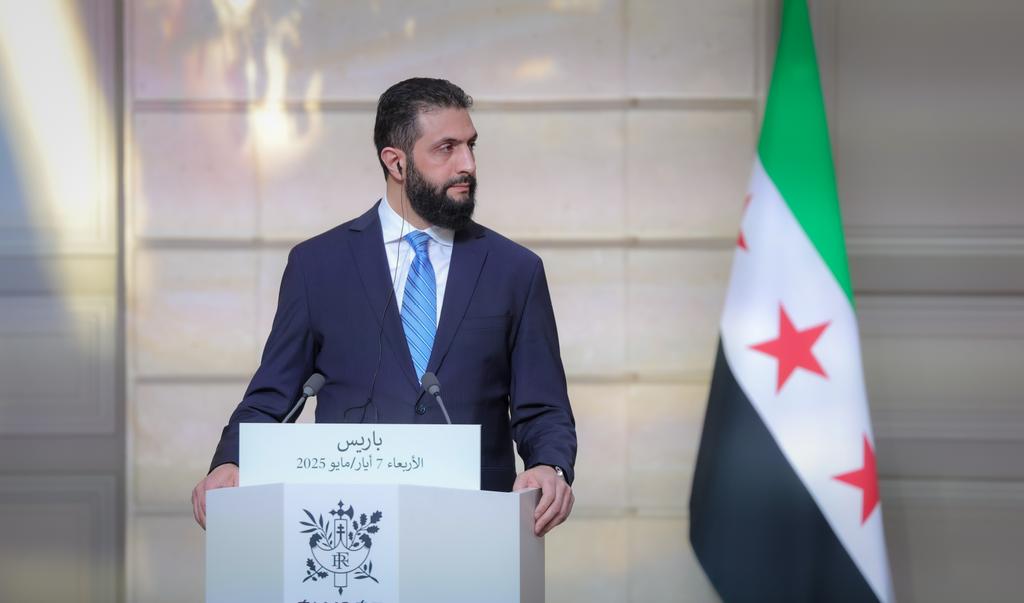

After 14 years of constant struggle, the unexpected fall of the decades-long Assad dictatorship left a power gap in the country. Even in the post-Assad era, there are several unresolved issues that raise concerns about the future of Syria, with the greatest fear being its potential descent into a situation similar to that of Libya or Egypt. In response, the new President Ahmad Al-Sharaa has been adopting different strategies to contain potential chaos in the country, striving towards both democratic transition and stabilisation. His administration has introduced a series of political and institutional reforms aimed at restoring state authority, re-establishing basic services, and initiating dialogue with opposition groups and local actors. However, some conflicts are rising, such as the sectarian violence in Latakia and Tartous against Alawites in March 2025, and the renewed violence in southern Syria, in Suwayda with fights between Druze militias and Sunni Bedouin tribes. While Al-Sharaa still aims for a phased democratic transition and national stabilization, his administration faces formidable challenges: lingering sectarian violence, limited control beyond major cities, impunity for security actors, and rising regional interference. The ongoing crises in both coastal and southern regions underscore the risks of fragmentation Syria currently confronts.
The current government understands the significance of stability in this decisive stage to prevent any sectarian conflicts or escalation of civil war that may take an already-fragile Syria to an unending cycle of chaos. The urgent need for a new government became especially evident after some recent events that happened in the west, in the coastal cities of Syria, an area where the Alawite minority is concentrated, as well as the southern part of the country. On 6 March, pro-Assad fighters attacked the new government’s troops and killed 16 Syrian soldiers, and this was followed by four days of chaos and sectarian clashes, leading to the death of 1,500 civilians. In late April, the Druze areas in Syria hosted severe clashes, resulting in several casualties. Beyond local disturbances and instability, groups like Druze cooperated with Israel and 100 Druze sheikhs even visited Israel, putting the Druze community in Syria under Israeli protection. This has greatly undermined Syria’s autonomy and put the sovereignty of the state at great risk by giving Israelis a reason to invade Syria by falsely justifying the need of Druze for protection. Consequently, Israel’s constant attacks and advancements on Syrian territory, especially in the Druze-populated region, started posing a serious threat to Syria’s territorial integrity.
The situation with the Druze worsened as of July 2025, with the eruption of intense clashes in the governorate of Sweida. What began as localized skirmishes between Druze militias and Sunni Bedouin tribes quickly escalated into one of the bloodiest episodes since the fall of the regime, killing hundreds within days and displacing tens of thousands. The Syrian government intervened by deploying security forces and imposing curfews on July 14-15, but its troops soon clashed with Druze fighters and faced accusations of participating in summary executions and looting. Amid soaring violence, Israel launched airstrikes on Syrian military positions on July 16, citing its commitment to protecting Druze communities near the Golan Heights. Fragile ceasefires were brokered on July 15 and 19, and a U.S.-backed truce allowed the evacuation of hundreds of Bedouin civilians. Ultimately, President al-Sharaa ceded local security control to Druze elders and community councils which effectively granted de facto autonomy to Suwayda. The fallout has been severe: over 90,000 displaced, widespread destruction of basic services (water, electricity, healthcare), and numerous credible reports of human rights violations, including summary executions and forced displacement. The crisis has severely undermined confidence in al-Sharaa’s ability to protect minorities and sustain national unity, while stoking fears of long-term state fragmentation.
As a result of these factors, Al-Sharaa found himself in a precarious position, grappling with the fallout of a power vacuum and navigating multiple challenges in governing the country. This underscored the imperative for a new form of government that not only shares his vision for Syria but also reflects the new system’s democratic aspirations. In fact, Al-Sharaa publicly stressed the role of democracy in the country’s future through “democratic and inclusive transition and state reconstruction.” Additionally, the agreement made with Syrian Democratic Forces (SDF) indicated the intention of the new government to be inclusive in running the country, as the agreement ensured integration of the Kurdish-led forces into the new government, ensuring their rights are protected in the constitution.
Yet, some setbacks weakened the new government’s position on this matter. The constitutional declaration was heavily reliant on the previous constitutions, lacking any mention of democracy. Additionally, the democratic commitment of the government was slightly reflected in the process of new cabinet formation. Led by President Al-Sharaa, the new Syrian transitional government was established on 29 March, 2025. Although this served as a crucial step toward a systemic democratic transition in the country, the structure of the cabinet raised several questions on the extent to which this government is aiming to work to realise democracy. The government has been criticised by the international community for including only three ministers out of 23 from the minorities, one of whom is a woman. Considering that most of the new cabinet members are those with close ties with Al-Sharaa, this may indicate that Al-Sharaa needs a team that shares his vision and priorities in managing internal affairs rather than introducing democratic governance at this critical stage. This, alongside the concentration of power in the hands of Al-Sharaa, poses a serious drawback to the new government’s attempts to prove its intention toward transforming the decades-long authoritarianism into democracy and undermines its legitimacy on the international stage.
The new Syrian government is aware that any sign of failed democratic transition hinders the involvement of international actors, like United Nations agencies or international community members, in Syria’s development initiatives. For instance, Qatar—a key actor in the recovery and reconstruction efforts in Syria—provided an $87 million grant to fund Syria’s public sector salaries, disbursed over three months and subject to extension. This not only alleviates financial burden on the Syrian government but also symbolizes the trust and confidence of an influential country and donor in Al-Sharaa’s leadership and his commitment to democratic transition. In addition, the French President Emmanuel Macron recently hosted Al-Sharaa and promised to lift the European economic sanctions, persuade the United States to take similar action, and facilitate refugees’ return if the Syrian president continues his work on democratic transition, based on constitutional reforms and inclusive governance. This reveals the centrality of democratic transition in restoring Syria’s broken relations with influential actors which have vital role in bolstering Al-Sharaa’s legitimacy and advancing Syria’s economic, political, and diplomatic revival.
The current Syrian government’s plan prioritises stability while working to integrate democratic principles into the new system. Some efforts have already been made to create a new democratic Syria, and the establishment of the new government has been viewed as the most prominent step toward Syria’s democratization. Yet, this limited form of democracy alone cannot ensure stability in Syria. The Syrian government led by Al-Sharaa must ensure the integration of inclusive governance and representation not only at government level but also at institutional, municipal and community level to prevent tensions among various ethnic, religious and political groups. Besides that, the government must lead a gradual but effective democratic reforms, emphasising the centrality of free and fair elections after the five-year-term of the current transitional government and enhanced trust in state institutions. In addition, to address the needs of people and prevent any disturbances induced by inequalities and poverty, the government must develop and execute a well-planned economic and humanitarian recovery strategy, leveraging its strong relations with countries such as Qatar and Turkiye and securing a conducive environment for the international organisations. While this paves the way for sustainable growth—immediate humanitarian response and long-term recovery—it must be approached temporarily and cautiously to minimize reliance on foreign aid.