ANALYSIS

Read Our Latest Article

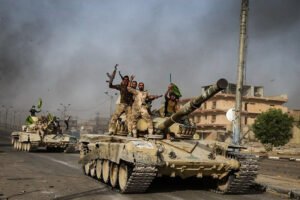
The Houthi Presence in Iraq: From a Support Network to Operational Depth

Firas Elias

The Houthi Presence in Iraq: From a Support Network to Operational Depth

Dr Firas Elias conducted a particularly in-depth investigation into the presence of Yemen’s Houthis in Iraq, focusing notably on their presence and activities, networks, modes of operation, missions, as well as their training arrangements and military cooperation mechanisms. Originally written in Arabic, this article provides a synthesis of this unique investigation, based largely on first-hand information gathered in the field. It thus offers unprecedented insight into how the Houthi presence in Iraq has been structured and how it has evolved.

Read More

CATEGORIES

From the instrumentalization of Militia by the State to a Militia State

October 16, 2025

Thierry Vircoulon

Since independence, the Sudanese government has relied on the same defense system in every conflict: the creation of local militias as counter-insurgency forces. This policy even transformed one militia into a genuine army, the Rapid Support Forces (RSF). The war opposing the RSF to the regular army since 2023 has accentuated the militarization of militias in Sudan to such an extent that the country has become a Milita State, threatening national unity.

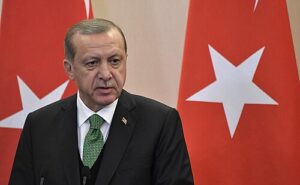
Turkey’s Comeback: Toward a Central Role in the Middle East?

October 7, 2025

Adel Bakawan

Adel Bakawan for Les Grands Dossiers de Diplomatie, no. 86 (June–July 2025).

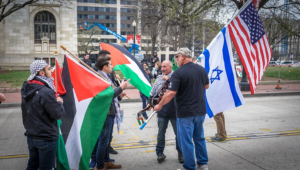
Haoues Seniguer’s book “God Is with Us: October 7 and Its Consequences — How Jewish and Islamic Religions Justify Violence”

October 2, 2025

Haouès Seniguer, Lyna Ouandjeli

The discussion happened on September 5th, 2025.

MOST VIEWED

Syria: The Disarmament of the Kurds, or the End of Rojava Era 

This article examines the content of the compromise reached between Damascus and the Syrian Kurds, its implication for the regional balance – Turkey, the United-States, Israel, and the peace process with the PKK – and places it within the long-term context of the Kurdish question, comparing it to the far more institutionalised but as fragile trajectory of  Iraqi Kurdistan, whose structural vulnerability, despite thirty years of constitutional autonomy, has been highlighted by Adel Bakawan. Finally, this article considers what the end of the Rojava era might mean for the future of the Kurdish national movement as a whole. 

Read More