


Over the course of four and a half decades, the ongoing competition and conflict between Israel and Iran have led to the formation of deeply entrenched “hostile identities” on both sides. These constructed identities have profoundly shaped their respective norms, beliefs, interests, and foreign policy decisions. As a result, hostility and mutual distrust have become normalised to the point where the notion of physically eliminating the other is considered acceptable and even legitimate. This perception is especially strong in Iran, where its adversarial identity is rooted in revolutionary and Islamic ideological foundations.
Iran’s anti-Israeli stance can be understood through two identity dimensions: the “revolutionary-ideological” and the “political-strategic.” The 1990s marked a pivotal shift between these identities, as Iran began to recognise the need for pragmatic policies and the importance of building domestic and international support, prompting a redefinition of its approach. In parallel, Israel developed a distinctly anti-Iranian posture, adopting a “containment” identity aimed at isolating Iran, promoting Iranophobia, and encouraging the imposition of further regional and international sanctions.
Revolutionary Anti-Israelism
Contrary to common perceptions, Iran’s revolutionary-ideological identity extends far beyond the ideological doctrines of the 1979 revolution. It represents a complex synthesis of anti-Western norms, criticism of the contradictions within modern societies, aspirations for social mobility, engagement with modernity, Islamism, revolutionary thought, and a fundamental rejection of dependency on both Eastern and Western powers. As a religious-social movement, the Iranian revolution encapsulates all of these elements.
Before the 1979 revolution, Iran under the Shah maintained close relations with Israel. In 1950, the Shah granted de facto recognition to Israel, allowing Tel Aviv to establish a large diplomatic mission in Tehran. During a period when Israel was boycotted by its Arab neighbors, it relied on Iran for approximately 40 percent of its oil imports, in return for arms, technological support, and agricultural products. At the time, Iran was also home to the largest Jewish community outside of Israel. Cooperation extended into the security sector as well—SAVAK, Iran’s secret police, was created in 1957 with support from the CIA and later the Israeli Mossad. By 1977, Iran and Israel had even initiated joint efforts to develop ballistic missile technology.
Over time, the close alliance between the Shah and Israel played a significant role in shaping the foundations of Iran’s anti-Israeli revolutionary identity. This identity began to emerge publicly in June 1963, when Ayatollah Khomeini—who would later become the founder and first Supreme Leader of the Islamic Republic—delivered a powerful anti-regime speech condemning the Shah. Delivered nearly sixteen years before the revolution, the speech led to Khomeini’s arrest just two days later. Notably, Israel featured prominently in his address; he mentioned the country sixteen times, declaring: “Israel does not want the Quran in this country; Israel does not want Islamic scholars in this country; Israel does not want Islamic laws in this country; Israel does not want scholars in this country.”
Following the 1979 revolution, Iran severed all diplomatic ties with Israel. Just six days after the revolution’s victory, Yasser Arafat, the late leader of Fatah, became the first official foreign guest to visit Iran. In a symbolic gesture, the Iranian government handed over the former Israeli embassy in Tehran to the Palestinian Fatah movement. Rooted in Islamic teachings that emphasize support for oppressed Muslims—particularly in relation to the Israeli occupation of Jerusalem, a city regarded as sacred and the first Qibla of Islam—anti-Israel sentiment quickly evolved into a central pillar of the new revolutionary identity. Over the past 46 years, this identity has been actively cultivated through state-controlled cultural production, including national television broadcasts (in the absence of non-governmental or private media), literature, and political slogans. One of its most visible expressions is the annual Quds Day march, held on the last Friday of Ramadan, which has become a major event symbolizing the regime’s anti-Zionist stance. The clerical establishment continues to promote the physical elimination of Israel as one of its core ideological objectives.
The need for tangible results
The end of the eight-year Iran-Iraq War in 1988, followed by the onset of the Persian Gulf War in 1991, signaled to Iran’s religious leadership that the revolutionary-ideological form of anti-Israel identity was no longer sufficient to advance the country’s anti-Zionist objectives. In response, Tehran began to adopt a more pragmatic, results-driven approach, transitioning from a purely ideological stance to a “political-strategic” identity. This shift allowed Iran to pursue tangible, material gains through its anti-Israeli posture. Until the conclusion of the Iran-Iraq War, Israel largely refrained from directly confronting Iran’s hostility, viewing Iraq as the greater regional threat. As such, the weakening of Baghdad served Israeli strategic interests. However, that calculation changed after the war, particularly following the 1992 bombing of the Israeli embassy in Buenos Aires and the 1994 attack on the Asociación Mutual Israelita Argentina (AMIA), both of which were attributed to Iran. These events marked a turning point, prompting Israel to adopt a more aggressive anti-Iran stance.
Simultaneously, Iran, under its evolving anti-Zionist identity, sought to strengthen its domestic popular base and legitimize its foreign policy agenda. On the international stage, it aimed to position itself as a leader of the Islamic world and a counterweight to global nuclear powers. One manifestation of this strategy was the implementation of a de-Arabization policy—designed not only as a cultural shift but also as a means of asserting Iran’s distinct identity and influence. The policy of de-Arabization was pursued alongside more concrete strategic achievements. While it gained momentum in the 1990s, its foundations were laid in the previous decade. A notable example is Iran’s deployment of Islamic Revolutionary Guard Corps (IRGC) forces, led by Ahmad Motavaselian, to Lebanon in 1982. This move, aimed at direct engagement with Israel and the training of Lebanese militant groups, took place even as Iran was heavily engaged on the front lines of the Iran-Iraq War. Such actions reflected Iran’s broader ambition to expand its influence beyond its borders and assert itself in the regional struggle against Israel, laying the groundwork for a long-term geopolitical strategy.
The Madrid Peace Conference of October 1991 marked a turning point in Iran-Israel relations, dealing a significant blow to Tehran’s regional positioning. At the conference, representatives from Lebanon, Syria, and Jordan entered into direct negotiations with Israel in pursuit of a lasting peace, leaving Iran increasingly isolated. The prospect of a comprehensive peace agreement between Arab states and Israel prompted Iran to reassess its stance. In response, Tehran sought to “de-Arabize” the Palestinian cause by reframing it as a broader Islamic issue rather than one confined to Arab identity or interests. This strategic repositioning was later validated by developments such as the Arab Peace Initiative in 2002, the U.S.-brokered “Deal of the Century” in 2020, and the signing of the Abraham Accords the same year—all of which confirmed Tehran’s fears of growing normalization between Israel and key Arab states.
In this context, Iran adopted trans-Arab slogans to reshape the discourse surrounding the Israeli-Palestinian conflict. Phrases such as “Palestine is a beloved part of Islam” and the heightened promotion of Quds Day played a central role in this strategy. These efforts served two main purposes: first, to reframe the conflict from a narrow Arab-Israeli dispute into a broader struggle between Israel and the Muslim world; and second, to position Iran as a leading voice in the Islamic world, particularly on the issue of Palestine. To advance this leadership role, Iran strategically avoided invoking Shiism, instead presenting the Palestinian cause as a shared concern and moral obligation for all Muslims, regardless of sectarian affiliation. In response, Israel doubled down on its anti-Iranian identity. This took the form of a three-pronged approach: promoting Iranophobia and anti-Iran sentiment among Arab neighbors and in international forums; reinforcing Iran’s diplomatic and economic isolation by lobbying for increased U.S. and global sanctions; and engaging in covert operations framed as part of a broader “shadow war” against Iran.
In terms of anti-Iran sentiment, Israeli Prime Minister Benjamin Netanyahu revealed in November 2017 that Israel had maintained ongoing, albeit covert, cooperation with several Arab nations over shared concerns about Iran’s expanding influence in the Middle East. This cooperation culminated in the signing of the Abraham Accords in 2020, marking a significant shift in regional dynamics. Regarding Iran’s isolation, Israel focused primarily on halting Tehran’s nuclear program and pressed the United States to impose additional sanctions on Iran. A notable example of this strategy is the Clinton administration’s adoption of a “Dual Containment” policy, which was largely influenced by Israeli lobbyists, including Martin Indyk, who strongly advocated15 for such measures to limit both Iran’s and Iraq’s power in the region.
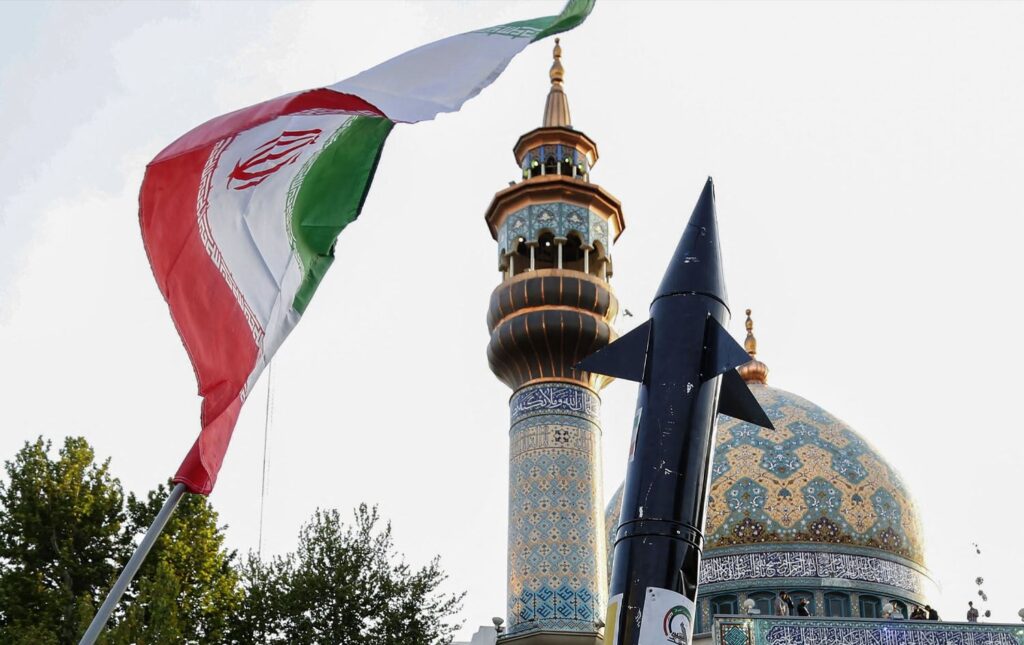
The 4.5 decades of conflict between Iran and Israel have cultivated a deeply hostile identity between the two nations, which, for the most part, remained indirect and was expressed through proxy engagements until October 2023. However, the events of October 7th, which led to a direct Israeli threat to Iran’s domestic interests and security, have profoundly shifted this dynamic. This shift has resulted in three direct confrontations between the two sides. The situation remains uncertain, as it is unclear whether the Iranian authorities’ threat to carry out Operation “True Promise 3,” along with General Hossein Salami, Commander-in-Chief of the IRGC, remarks about establishing “a new equation to retaliate against Israel in the event of an attack on Iranian interests anywhere in the world,” will escalate to a mutual intention to physically eliminate one another. Alternatively, it is possible that both countries could pursue a path of détente or enter a phase of cold peace following a period of heightened tensions.