

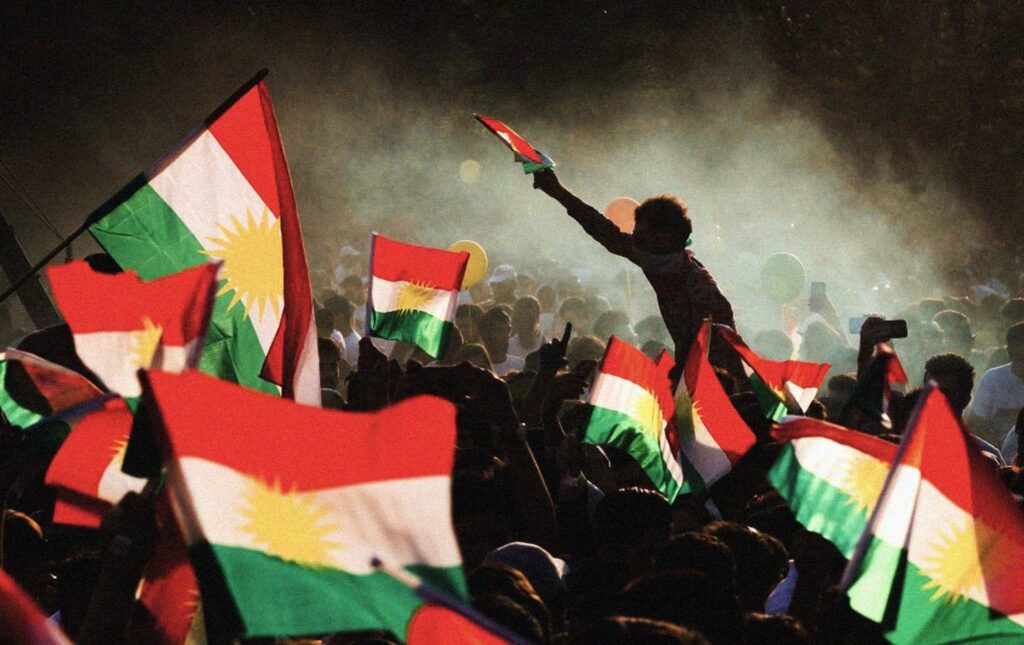

The Mirage of the “New” Middle East
On September 29, 2024, Israeli Prime Minister Benjamin Netanyahu declared, “This operation is part of a systematic Israeli plan aimed at altering the strategic reality in the Middle East”. The notion of a “new Middle East” continues to spark reflection, frequently invoked as a complex process involving redrawn borders, shifting power dynamics, and the rise and fall of regional actors. In 2006, U.S. Secretary of State Condoleezza Rice asserted, “It is time for a new Middle East”, a sentiment echoed by numerous leaders, analysts, and commentators across the region. The concept has been particularly embraced by Israeli politicians, from Shimon Peres—who titled his book The New Middle East: A Framework and Process Towards an Era of Peace—to Benjamin Netanyahu. Meanwhile, in Iraq, popular primetime TV host Ahmed Mala Talal has dedicated his entire Ramadan programming to discussions on the “new Middle East”.
The concept of the “new Middle East” carries multiple interpretations, and its frequent recurrence has only added to its complexity. First, it reflects a widespread belief in the possibility of change and the emergence of a new regional order distinct from the current one. Second, it underscores the general dissatisfaction with the existing arrangements. Third, it highlights the varying degrees of readiness among different actors to embrace this transformation. Fourth, many perceive the idea as part of an ongoing plan or conspiracy to reshape the region. In reality, the lack of a dominant indigenous power capable of imposing hegemony—combined with the region’s vast natural resources and strategic significance—has fueled continuous efforts to redefine its geopolitical landscape. Yet, the exact meaning of “new” remains elusive. Whether tangible or illusory, the belief in its possibility continues to shape regional geopolitics. Against this backdrop, we must ask: how do these shifting dynamics affect the Kurds in Iraq, Syria, Turkey, and Iran? The latest wave of a potential “new” Middle East began with the October 7th attack in 2023.
October 7th: The event that shook the order
At dawn on Saturday, October seventh, 2023, during the Jewish high holiday of Simchat Torah, Hamas launched a combined attack on Israel, breaching security barriers and firing a barrage of rockets from Gaza. The assault occurred exactly 50 years and one day after Egyptian and Syrian forces attacked Israel on Yom Kippur, seeking to reclaim territory lost in the 1967 Six-Day War. The Six-Day War was a pivotal moment in the region’s history, reshaping political and geopolitical dynamics. Its consequences extended beyond territorial disputes, influencing attitudes, ideologies, and collective psychology. The Arab defeat marked the decline of Arab nationalism—particularly Nasserism—and contributed to the rise of Islamist movements across the region.
The October 7th attack can arguably be traced back to 1967, as the Palestinian faction that launched the assault was Islamist. In response, Israel initiated a large-scale military operation with multiple objectives, including ensuring long-term security and maintaining regional deterrence. This placed the Axis of Resistance among its primary targets. By pursuing these goals, Israel has altered the region’s geopolitical landscape, particularly by weakening Iranian proxies and the broader Axis of Resistance. This shift has had direct consequences for Syria, Iraq, and Iran—three countries home to significant Kurdish populations. If these states grow weaker, the implications for the Kurds could be profound.
Turkey is rather different
Turkey faces both challenges and opportunities in the evolving regional landscape. The weakening of Iran as a regional power has created an opening for Turkey to push for Assad’s removal, particularly as Israel has undermined Hezbollah’s position in Syria. Today, the Middle East is largely shaped by the influence of Israel, Turkey, and the United States, with the Gulf states playing a supportive role. As one U.S. official put it, “Washington believes the foundations of a better Middle East involve weakening Iran, the United States’ primary regional rival, and normalizing relations between Israel and Saudi Arabia in the hope of unlocking new investments”. Syria has undergone the most significant transformation, with Assad’s unexpected flight to Russia shifting the balance of power. Turkey and Israel have since emerged as dominant players in the country, engaging in a fierce competition to expand their influence and fill the void left by Iran’s decline. While a direct military confrontation between Turkey and Israel remains unlikely, as suggested by the Nagel Committee tensions over Syria’s future are inevitable. In an effort to counterbalance Turkey’s regional ambitions, Israel has sought to deepen its ties with Greece, the Greek-led government of Cyprus, as well as local Druze and Kurdish communities.
The Syrian Kurds and the Northeast Syrian administration find themselves under the combined influence of the U.S., Turkey, and Israel. However, the administration’s cohesion and, above all, its battle-hardened fighters make it a challenging force for Turkey and its proxies to subdue. This has also hindered Turkey’s ability to impose its will on the region. Given its broader regional ambitions, particularly in Iraq and Syria, Turkey has viewed reconciliation with the Kurds as a necessary step in advancing its objectives.
Abdullah Öcalan’s historic call for PKK disarmament has not only reshaped Kurdish-Turkish relations within Turkey but has also had broader implications, particularly in Syria. Meanwhile, tensions between Erdoğan and Netanyahu over Syria continue to escalate. Netanyahu’s support for Kurdish groups has drawn a strong reaction from Erdoğan, who warned Israel: “Anyone trying to exploit Syria’s instability by fueling ethnic and religious tensions should know—they will fail. We will not allow Syria to be divided according to their imagined maps.”
Some argue that while Israel and Turkey possess significant military power, true influence ultimately lies in the financial strength of Saudi Arabia, Qatar, and the UAE. Meanwhile, the Kurds are adapting to the evolving situation with a sense of optimism. For the first time in their history, they have gained substantial visibility on the global stage. In the past, massacres of Kurds occurred in secrecy—this is no longer the case. There is a sense of cautious optimism in Turkey, though not universally shared. The prospect of PKK disarmament and a greater reliance on democracy remains a challenge in today’s political climate, but it is seen as a step forward. Öcalan himself has emphasized that concepts like a separate nation-state, federalism, administrative autonomy, or cultural solutions fail to address Turkey’s historical and social realities. Instead, he advocates for “respect for identities, free self-expression, and democratic self-organization of each segment of society based on their own social, economic, and political structures,” which he argues can only be realized through a democratic society and political space. However, domestically, some analysts—including Selim Koru and Nick Danforth—suggest that this call may not necessarily strengthen democracy but could instead reinforce autocratic tendencies.
These developments have both direct and indirect impacts on Iraq and the Kurds within the country. The current Shia-led government in Baghdad is facing its weakest moment following Assad’s fall, the diminishing influence of Iran, and potential pressure and attacks from the U.S. and Israel. Iraqi Shia leaders are now calling for separation from Iraq and the establishment of an independent Shia state, as noted by Maliki and Hussain Mounas. This shift has softened the Shia political stance toward the Kurds on several issues, such as the possibility of exporting oil through Turkey. This change is further supported by pressure from the Trump administration on the Sudani government, as highlighted in the most recent phone call between the U.S. Secretary of State and the Iraqi Prime Minister. The Shia elites are under significant pressure, and many are seeking to engage with the U.S. through the Kurds, as sources have informed me. While these developments may be linked to Trump’s return to the White House, they are primarily a result of the post-October 7th geopolitical shifts.
There is an intriguing paradox when it comes to Iran. Despite Iran’s primary objective after October 7 being the defeat of Israel, particularly through its proxies, Iranian Kurdistan remains the least affected part of Kurdistan. The Kurds in Iran are the country’s third-largest ethnic group, following the Persians and Azeris. In the wake of October 7, Iran has faced exposure, humiliation, and a significant loss of its regional assets. This has led to an escalation that could potentially culminate in direct conflict. Meanwhile, Iranian Kurds are growing weary after the failure of the “Jin, Jiyan, Azadi” (“Woman, Life, Liberty”) protests15. As Iran moves toward possible crises, hardliners within the country are rejecting any form of reconciliation, refusing to open up the system or become more inclusive. For instance, in February, the Iranian Parliament rejected a proposal to introduce the teaching of non-Persian languages in schools.
In recent years, there has been a significant rise in efforts by local, regional, and international powers to influence the power structure and security architecture of the Middle East. The region is currently experiencing what Gramsci termed ‘morbid symptoms’: “while the old is dying and the new cannot be born; in this interregnum, a great variety of morbid symptoms appear“. If a new Middle East does emerge, it could be more favorable for the Kurds, as the old Middle East has often disadvantaged them. However, no outcome is certain. While the Kurds may not achieve their aspiration of an independent nation-state, there is potential for greater recognition and inclusion. Nonetheless, the current situation remains far from resolved.