

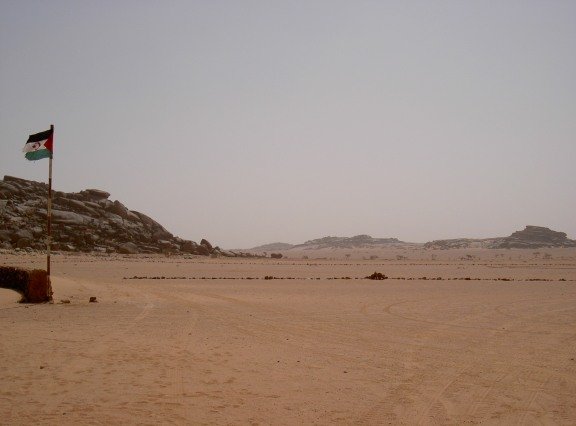

October 31, 2025, marked a turning point in the fifty-year-long conflict over Western Sahara, involving Morocco, the Polisario Front, and Algeria. The UN Security Council adopted Resolution 2797, which establishes the Moroccan autonomy plan as the normative framework for resolving the conflict. The resolution endorses the Moroccan initiative, which includes administrative autonomy for the territory under the sovereignty of the kingdom, with 11 votes in favor, three abstentions (China, Russia, and Pakistan), and Algeria refusing to participate in the vote. That same evening, King Mohammed VI hailed this as a “new victorious chapter[1],” calling on the Sahrawis in Tindouf and the Algerian president to seize the opportunity for a definitive political settlement of the conflict. This article revisits the historical and political causes of the conflict, which, in the words of former UN Secretary-General António Guterres, “has lasted far too long.”
European Colonizations and the Concept of Greater Morocco
In the 19th century, the weakened Sharifian kingdom faced the imperial ambitions of France and Spain. The conquest of Western Sahara was initially carried out by private Spanish enterprises: the Canarios-Africanas and the Sociedad de Africanistas y Colonialistas. The first Spanish trading posts were established in the Tarfaya area, particularly in Dakhla, named Villa Cisneros. This enterprise received support from the Spanish government in 1885, which competed with France for control of the territory. The secret Franco-Spanish agreements of 1904 delineated the respective spheres of influence of the two colonial powers in Morocco. Meanwhile, the advance of merchant capitalism and the French military encirclement weakened the power of the Sultan and the Makhzen. The Treaty of Fez in 1912 marked the official start of the French protectorate over Morocco, followed the same year by the Spanish protectorate in the northern part of the country. In Western Sahara, Spain only exercised effective control from 1934, thanks to French military support, which allowed it to subdue the rebellious Sahrawi tribes. An assimilation policy eventually won over some of the Sahrawi notables[2].
During the same period, following the promulgation of the Berber Dahir[3] by the French Residency[4] in 1930, Moroccan nationalist movements united to form the Moroccan Action Committee, the first nationalist political party in the country. From the 1940s onwards, Allal al-Fassi, the emblematic leader of the Istiqlal Party (founded in 1943), demanded the independence of Greater Morocco. He based this concept on the territorial peak of the Almoravid dynasty (1040–1147), whose areas of influence extended to the Senegal River, and the Saadian dynasty (1554–1636), which dominated the southeastern territories as far as Mali and the Niger Loop[5]. This vision spread enthusiastically among Moroccan nationalists and resistance fighters. It was intended to recall a brilliant chapter of national history, with the Saharan and Mauritanian territories serving as transit zones, commercial exchange hubs, key trade routes to Sub-Saharan Africa, and homelands of warrior tribes. Dissatisfied with the terms of independence reached through negotiations between King Mohammed V, the Istiqlal Party, and France, Allal al-Fassi continued to demand the liberation of Mauritanian and Saharan territories (Western Sahara, Béchar, and Tindouf in French Algeria) from French and Spanish occupation, in a tense political context.
The first post-independence years saw latent rivalries emerge between the Istiqlal Party, the monarchy, and the resistance fighters, who had previously been allies during the struggle for independence[6]. The disputes centered on differing visions for the political configuration of the new state. The Istiqlal Party, in particular, hoped to exercise real executive power within a parliamentary monarchy. Against a backdrop of power rivalries between the monarchy, the Istiqlal, and certain dissident tribes in northern and eastern Morocco, the National Resistance Council decided in August 1956 to continue the liberation of Western Sahara. The southern wing of the National Liberation Army (ALN), the armed branch of the resistance aligned with Istiqlal positions, refused to join the newly formed Royal Armed Forces (FAR). Solidarity with the Algerian struggle against French occupation, it called for total independence for North Africa. Alongside Sahrawi tribal fighters, it carried out harassment operations against French and Spanish troops in 1957. Although it succeeded in controlling the city of Smara and advancing toward Laâyoune, the ALN was crushed during the Ifni War, also called Operation Hurricane-Brushing, conducted jointly by France and Spain in February 1958, which abruptly ended its operations[7].
Emergence of Sahrawi Independence Aspirations Amid Political Dissidence in Morocco
The year 1961 marked the beginning of King Hassan II’s reign, a period marked by internal political tensions arising from the left-wing opposition represented by the National Union of Popular Forces (UNFP), which had split from the Istiqlal Party in 1959. These tensions revolved around a struggle for power and deep divergences over Morocco’s political and economic orientation. The UNFP, inspired by socialist ideals, advocated for the democratization of the state apparatus, parliamentary governance, social justice, and full national sovereignty. It rejected the 1962 Constitution, which granted broad powers to the king and was considered undemocratic as it had been drafted by a non-elected assembly. The conflict escalated into severe repression of opponents, known as the “Years of Lead.” During this period, the Sahara issue was not a priority for the palace, which was focused on consolidating its rule.
Former resistance fighters, including politician Fquih al-Basri, welcomed about two hundred young Sahrawis who had survived the Ecouvillon battles into a hostel in Casablanca[8]. Among them were future leaders of the Polisario Front, including Mustapha al-Ouali, who studied at Mohammed V University and was active in the National Union of Moroccan Students (UNEM). In 1965, the UN called on Spain to decolonize the territories of Western Sahara and Ifni[9]. At the same time, liberation movements in the Sahara began to take shape, particularly between 1968 and 1973, such as the Liberation and Unity Front and Harakat Tahrir. Although these groups initially did not advocate independence, they felt abandoned by the Royal Armed Forces (FAR) and the Moroccan political elite in their struggle against Spanish forces. This sense of betrayal grew following events that became catalysts for Sahrawi independence aspirations and the shift toward armed struggle. One such event was the brutal repression of a Sahrawi demonstration by Spanish forces on June 17, 1970, in Laâyoune, known as the Zemla Affair[10], which resulted in several deaths and disappearances, including that of the leader Driss Bassiri. A year later, the Tan Tan incident occurred when Moroccan police violently dispersed demonstrations by young Sahrawis protesting Spanish occupation in the city of Tan Tan[11].
On May 13, 1973, the Popular Front for the Liberation of Saguía El-Hamra and Río de Oro (Polisario Front) was founded. Supported by Libya and Algeria, it carried out attacks on Spanish garrisons. The following year, during its second congress, the Polisario formally demanded the independence of Western Sahara.
Guerrilla Warfare, Referendum Process, and Autonomy Plan
In response to these developments and amid weakening national cohesion following two attempted military coups in 1971 and 1972, King Hassan II proclaimed a “Sacred Union” in a July 1974 speech, emphasizing the Moroccan character of the Sahara. He also referred the matter to the International Court of Justice (ICJ). The national consensus around this cause fostered rapprochement between the opposition and the palace. Indeed, apart from Ila al-Amam, the Marxist-Leninist party led by Abraham Sarfaty, all Moroccan political and trade union factions agreed on Moroccan sovereignty over the “southern provinces.” The king launched an international diplomatic campaign, sending political leaders abroad to advocate for Morocco’s claim to the Sahara. A few days after the ICJ issued its advisory opinion on October 16, 1975—which recognized allegiance ties between certain Sahrawi tribes and Moroccan sultans but rejected the existence of a sovereignty relationship between Western Sahara and both the Kingdom of Morocco and the Islamic Republic of Mauritania—King Hassan II launched the Green March on October 28, 1975, toward Tarfaya, with 350,000 volunteers moving toward the Spanish border. The declining health of President Franco and the Spanish succession crisis led to flexible negotiations with Spain, resulting in its withdrawal and the signing of the Madrid Accords on November 14, 1975. These accords established temporary administration of the territory by Morocco, Mauritania, and the Jemaâ[12](Sahrawi assembly). At the UN level, the status of the Saharan territory remained unresolved, classified as a non-self-governing territory. In 1976, the Sahrawi Arab Democratic Republic (SADR) was proclaimed in Algiers by the Polisario Front, supported by socialist Arab republics. Algeria, in particular, provided logistical and military support, citing the right to self-determination, but also pursuing strategic interests: rivaling Morocco, with which relations had been tense since the 1963 Sand War, and securing potential access to the Atlantic coast and Saharan resources[13] in the event the SADR became a reality.
The battles of Amgala erupted between the Polisario and Morocco, resulting in victories for the independence movement. The Polisario then waged a guerrilla campaign, escalating to the January 1979 attack on the Tan Tan garrison. That same year, Mauritania unilaterally withdrew from the conflict following a military coup that overthrew President Ould Dadah. Beginning in 1980, General Dlimi initiated the construction of a defensive wall to contain Polisario raids. With Israeli and American cooperation[14], the “sand wall” transformed the guerrilla conflict into a war of attrition and solidified Moroccan control over 80% of the Saharan territory. By the late 1980s, UN-mediated talks between Morocco and the Polisario led to a ceasefire in 1991[15]. The United Nations Mission for the Referendum in Western Sahara (MINURSO) was established. However, deep disagreements over the implementation of the referendum, particularly regarding the definition of the electoral body, prevented it from taking place. After two decades of stalemate, Morocco proposed its autonomy initiative in 2007. The plan called for the creation of an autonomous region with locally elected legislative, executive, and judicial bodies, responsible for local administration, regional police, and local courts, while Morocco retained control over sovereign functions such as defense, foreign affairs, and currency.
Over the 2000s, Morocco’s autonomy plan gained increasing diplomatic support, culminating in U.S. backing in 2020. On December 12, 2020, in Washington, American, Israeli, and Moroccan officials signed the Tripartite Declaration, recognizing U.S. recognition of Moroccan sovereignty over Western Sahara alongside the normalization of diplomatic relations between Morocco and Israel. Known as the Abraham Accords, this transactional declaration triggered a diplomatic cascade: between 2020 and 2025, several countries from Central America, the Mashreq, and West Africa opened diplomatic representations in Laâyoune or Dakhla. European countries, including Spain in 2022 and France in 2024, also joined the list of states supporting Morocco’s roadmap.
Conclusion
Resolution 2797, for which the United States was the penholder, represents a turning point in Africa’s oldest territorial conflict. While it extends the MINURSO mandate for another year, it now endorses Morocco’s autonomy plan as the basis for negotiations between the parties. The Polisario Front and Algeria rejected the resolution, arguing that it dilutes the Sahrawis’ right to independence. However, they are diplomatically isolated. Their current refusal to engage formally in negotiations limits the resolution’s impact. A shift could occur if the United States succeeds in convincing Algeria to play a mediating role. In October 2025, U.S. Special Envoy to the Middle East Steve Witkoff announced efforts to foster Algerian-Moroccan reconciliation20. Yet whether a “pax Americana” can guarantee lasting peace in the Maghreb remains highly uncertain.
Notes
[1] Vermeren, Pierre, Histoire du Maroc depuis l’indépendance, Editions la découverte, 2002
[2] Mohsen-Finan, Khadija, Sahara occidental, CNRS Histoire, CNRS Éditions, 1997
[3] Considered one of the catalytic factors of Moroccan nationalism, the Berber Dahir provided for the judicial autonomy of Amazigh tribes by subjecting them to their customary law rather than Islamic law, thereby removing them from the Sultan’s jurisdiction. It was perceived as an attempt at division based on the Berber/Arab dichotomy.
[4] Seat of the French Resident-General in Rabat during the Protectorate period (1912–1956).
[5] Kader, Abderrahim, Géopolitique du Maroc, Biblio monde, 2018
[6] Vermeren, Pierre, Histoire du Maroc depuis l’indépendance, Editions la découverte, 2002
[7] Assidon, Elsa, De l’opération « Ecouvillon » à l’intervention en Mauritanie, Le Monde diplomatique Février 1978
[8] Perrault, Gilles, Notre ami le roi, Éditions Gallimard, 1992.
[9] Resolution 2072 of 16 December 1965 does not specify with which party Spain should negotiate for the liberation of these territories. Western Sahara was then claimed by Morocco and, since 1963, by Mauritania.
[10] Soudan, François, La blessure de Zemla : le massacre méconnu à l’origine du Polisario, Jeune Afrique, 23/12/2023
[11] Perrault, Gilles, Notre ami le roi, Éditions Gallimard, 1992.
[12] Déclaration de principes
[13] CIA File “ The Moroccan Perspective on The Sahara Issue” du 12/12/1977
[[14] Amiar, Jamal, Le Maroc, Israël Et Les Juifs Marocains, Biblio monde, 2022
[[15] Suivant la résolution de l’ONU 690 du 27 juin 1990