


Lebanon is currently trapped in a complex strategic dilemma shaped by internal and international pressures. At the center of this dilemma is the question of whether the state can realistically disarm Hezbollah, a Shia political and military organization that operates outside formal state authority despite participating in politics and running a broad social-service network. Disarmament has been a recurring demand since the 1989 Taif Accords, which called for dismantling all non-state armed actors and placing their military capabilities under the sole authority of the Lebanese state. Hezbollah, however, has long refused to do so. Lebanon’s fragmented political environment and the broader regional dynamics further complicate the feasibility of disarmament. The issue returned to the forefront after the recent Israel–Hezbollah war, as the full disarmament of the group became one of the key points in the ceasefire agreement signed on November 27, 2024.
Using a scenario-based approach, this article assesses the feasibility of the proposed disarmament plan examining internal, regional, and international dynamics.
Hezbollah’s Evolution and the Long Debate Over Disarmament
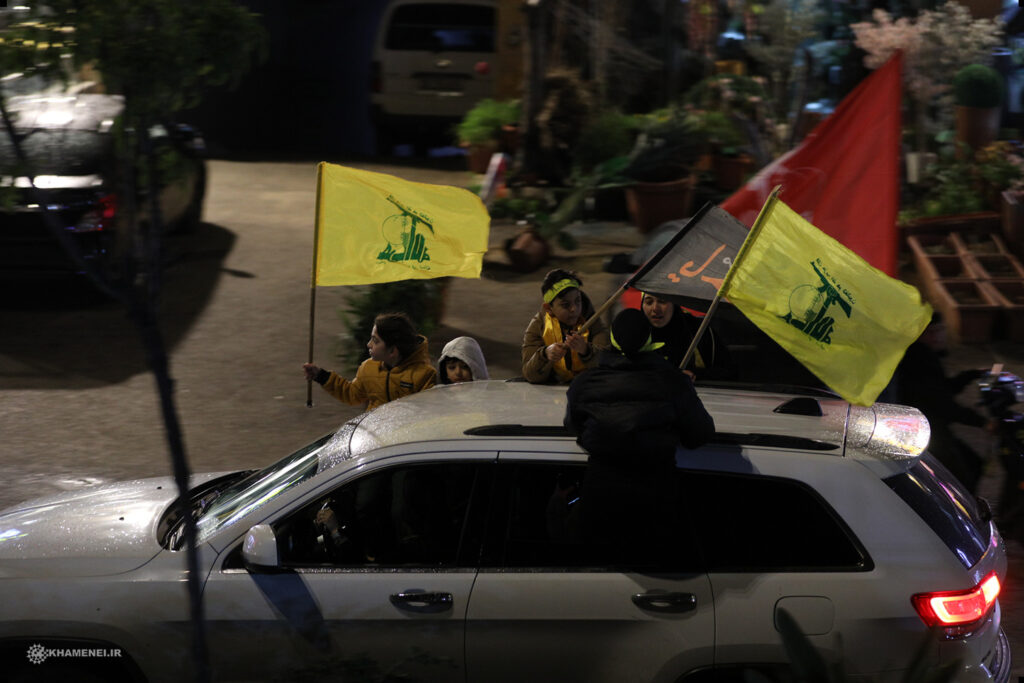
Hezbollah (the “Party of God”) is a non-state Shia military and political group in Lebanon, supported and funded by Iran. The group rose to prominence during the Lebanese Civil War, specifically in the 1980s. The group has framed itself as the “resistance” (المقاومة in Arabic) and its agenda has primarily focused on resisting Israel. Since 2005, Hezbollah has participated in the Lebanese political scene in a coalition alliance with another Shia party, the Amal Movement.
Up until the latest war between Israel and Hezbollah (2023 – present), the party was one of the strongest non-state actors in the Middle East. Its influence stems not only from military strength but also from its deep entrenchment in Lebanese society. Hezbollah has developed what many describe as a “state within a state,” providing extensive social services, from healthcare and education to housing and welfare, in exchange for political loyalty. However, with the recent escalation of hostilities between Hezbollah and Israel and the fall of the Assad regime in Syria, the group has suffered a major blow, though certainly not a complete defeat. Disruptions to its communication networks, the targeting of senior leaders, and leadership shifts within both Syria and Lebanon have made the smuggling of weapons and finances more difficult, though far from impossible.
Understanding whether the current disarmament plan can succeed requires identifying domestic, regional, and international actors and assessing their incentives for or against Hezbollah’s demilitarization.
Domestic Political and Military Dynamics
To give context, the disarmament of Hezbollah has been on the table ever since the Taif Accords (1989), which ended the devastating civil war in Lebanon. The agreement demanded that all militia groups be fully disarmed and their weapons handed over to the Lebanese Army. Hezbollah bypassed this requirement by arguing that it did not apply to them. This argument stems from the idea that Hezbollah was not a militia group like the rest, but rather a resistance movement against the Israeli occupation in southern Lebanon. This special kind of categorization of Hezbollah’s armed wing created a conditional disarmament based on regional developments rather than domestic consensus. Today, the Lebanese executive branch has been in favor of disarming the group. However, Hezbollah has refused to cooperate with the army on the disarmament plan, arguing that Israel must first withdraw from several hills along the border and halt its daily strikes on Lebanese territory. Additionally, the party’s new secretary general, Naim Qassem, has objected to the plan and even threatened to block the cabinet’s work by withdrawing the group’s Shia ministers.
Another central domestic factor is the Shia community itself. Many fear that without Hezbollah’s military protection, they would be vulnerable not only to Israel but also within Lebanon’s sectarian system. Lebanon’s political structure reinforces these concerns: access to resources, representation, and security are organized through sectarian channels. In this context, Hezbollah positions itself as the guarantor of Shia political agency and communal safety. Its power is therefore not only military but also socioeconomic. Finally, a common argument against disarmament is that the Lebanese Armed Forces (LAF) are too weak to guarantee Lebanon’s security. This creates a structural paradox: the state can only disarm Hezbollah once it builds stronger institutions, but it cannot build those institutions as long as a parallel armed actor operates outside its authority. In practice, Hezbollah’s military autonomy limits the LAF’s ability to expand, modernize, or receive unrestricted international assistance. As a result, the state remains locked in a cycle where its weakness justifies Hezbollah’s arms, and Hezbollah’s arms reinforce that weakness.
Regional and International Pressures
Regionally, Hezbollah has also claimed that the new neighboring regime of Al-Sharaa poses a security threat through potential jihadist activity, using this argument to justify keeping its weapons. Meanwhile, internationally, the disarmament of Hezbollah has also been included in several UN Security Council resolutions, including Resolution 1701, which called for the concentration of weapons under the exclusive authority of the Lebanese state. International expectations, however, often exceed Lebanon’s actual state capacity. This mismatch creates a structural problem: Lebanon is held responsible for implementing obligations it lacks the tools to enforce.
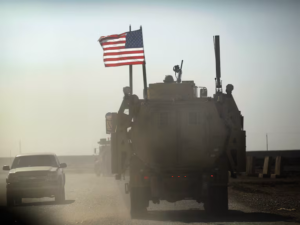
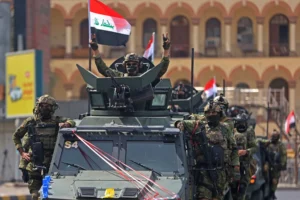
With the 2024 escalation of hostilities between Hezbollah and Israel, the latter, along with the U.S., has never been more determined to disarm Hezbollah despite the odds. The LAF, with its limited funding and years of deteriorating infrastructure, has been put on the front line to handle the situation. Following sustained U.S. pressure, the Lebanese government, led by Prime Minister Nawaf Salam, instructed the LAF in August to prepare a plan to bring all weapons under army control by the end of the year. However, the LAF’s disarmament efforts so far have focused mainly on the area south of the Litani River.
The lack of a clear timeline has further consequences. Lebanon continues to face a volatile security environment, and promised financial investments from Gulf states remain on hold. Without concrete steps, uncertainty hampers both security and economic recovery. Even as Hezbollah’s military infrastructure has been weakened by Israel, there remains a strong fear that pressuring the group could spark confrontation with the LAF. This creates a high-risk environment in which any miscalculation could trigger domestic confrontation or regional escalation.
Scenarios for Hezbollah Disarmament
To assess whether the disarmament of Hezbollah is feasible within the current geopolitical context, it is helpful to conceptualize the possibilities using a scenario-style analysis. A logical framework identifies three main scenarios: full disarmament, partial disarmament, and no disarmament (maintaining the status quo).
1. Full Disarmament
The success of a full disarmament plan would be highly favorable to Tel Aviv and Washington, and the least favorable outcome for Tehran and Hezbollah. Fully disarming Hezbollah could potentially transform its role from a political and military force to one limited primarily to religious activities. Internally, notable opposition parties to Hezbollah, such as the Lebanese Forces, have seen this as an opportunity to change the reality in which Lebanon has been living for the past 40 years, “without a real state in Lebanon.” Even Hezbollah’s former major Christian ally, the Free Patriotic Movement, has criticized the organization, arguing that it made strategic mistakes after October 7.
Regionally, Iran remains committed to one of its most-invested proxies in the region and its key deterrent against Israel. Several high-profile visits by Iranian leaders to Lebanon have made it clear that Hezbollah does not have the green light from Tehran to abandon its arms yet. Logistically, full disarmament given the current state of the LAF is nearly impossible; given Hezbollah’s non-cooperative stance, it would likely require the army to confront the party directly.
2. No Disarmament (Status Quo)
At the opposite end of the spectrum: no disarmament, where Israel might attempt to coercively disarm Hezbollah, but this could result in the worst-case scenario for Lebanon. The situation could escalate U.S. pressure and potentially encourage Israel to carry out full-scale airstrikes across the country. Israel would also likely continue enforcing its five-point demands and possibly expand them under that pretext. This scenario would also risk Lebanon facing U.S. sanctions and losing conditioned assistance from both the U.S. and Gulf countries, as the dismantling of Hezbollah is a key condition for support. Ultimately, Lebanon could become a battleground for an Israel–Iran confrontation, further undermining Lebanese sovereignty. Such a scenario would exacerbate the country’s economic crisis and deepen its international isolation.
The problem with the US-proposed disarmament plan is that it appears designed to fail. In a recent interview with The Nation, the US special envoy to Syria and US ambassador to Turkey, Tom Barrack, criticized the Lebanese government, saying that “all they do is talk” regarding the Hezbollah disarmament plan (Middleeasteye, 2025). He also spoke openly with journalist Hadley Gamble about the difficulty of disarming Hezbollah. Tom Barrack said that if the LAF does not carry out the disarmament, the U.S. will not do it for them. Instead, he stated:
“…Walk across that border. Do you see where Jerusalem is? Jerusalem is going to take care of Hezbollah for you.’” Barrack also noted that there is literally zero incentive for Hezbollah to give up its arms, indicating that even the U.S. is skeptical of the success of the disarmament plan.
3. Partial Disarmament (Most Likely)
The third possible scenario is partial disarmament executed through a phased process in which the party hands over certain types of weapons. This scenario could involve a minor reduction of arms production to avoid military escalation or further sanctions for the time being. In this case, the Lebanese government would not fully exercise its sovereignty, and Hezbollah would not be completely inactive. This would allow the LAF to slowly receive aid and training; at the same time, it would allow Hezbollah to continue carrying out its smuggling activities and potentially rearm itself. In this case, Lebanon would receive the promised aid, while Hezbollah would position itself as cooperative rather than defeated. Yet, weapon handovers would be selective: the party might give up some missiles and drones but keep arms for future defensive purposes. Thus, assessing the feasibility of disarmament under current conditions, full disarmament remains unlikely because of Hezbollah’s resistance, the Lebanese army’s limited capacity, and Iran’s continued support for the group. Additionally, Hezbollah’s ideology is rooted in resistance to Western influence; therefore, disarmament would undermine the very foundation of its political identity. Without this resistance narrative, the party’s legitimacy and ultimately its survival would be at risk, given Lebanon’s sectarian political system.
To achieve full disarmament, it is crucial to implement complete structural changes along with a strong central authority. Additionally, Hezbollah has strong internal political and social ties that, if pressed too much, could activate them and potentially create civil unrest in the best-case scenario and civil war in the worst-case scenario. Partial disarmament remains a probable outcome, in which Hezbollah may hand over selected weapons while retaining a core arsenal. This would allow Lebanon to access international aid without triggering open conflict. Complete failure to disarm remains possible as well, particularly if Hezbollah perceives external pressure as a direct threat. However, such a scenario risks major Israeli military intervention and increased economic sanctions. Hezbollah might begin negotiating the terms of disarmament without actually handing over its weapons, but full disarmament remains far-fetched.
Latest Developments
The recent Israeli airstrike on Haret Hreik in Beirut, which killed Hezbollah’s acting chief of staff Ali Tabatabai, further complicates the already fragile truce between the two parties. The strike, combined with continuous Israeli air raids in southern and western Lebanon, is part of what Israeli officials describe as a “zero-containment strategy,” a posture that rejects any future rearmament or regrouping of Hezbollah. The operation also suggests that Israel may be willing to escalate militarily on the Lebanese front if it believes the current moment provides a strategic advantage.
It is widely acknowledged that full disarmament of Hezbollah is impossible within the tight deadlines outlined in the ceasefire framework. While Washington continues to pressure Beirut to meet these commitments, Israel has offered no political or security incentives that could support a negotiated process. The absence of political guarantees for Lebanon further reduces Hezbollah’s incentive to engage with the disarmament plan. At the same time, the LAF’s limited capabilities and Lebanon’s deep political fragmentation render rapid implementation unrealistic. Israel’s accelerated operational pace therefore narrows the space for gradual or negotiated steps and increases the likelihood that any disarmament effort will happen under coercive conditions rather than through political consensus.
Conclusion
Disarming Hezbollah requires political, military, economic, and social components that Lebanon presently lacks. The LAF, ranked 115th out of 145 in global capability, cannot independently implement disarmament (Global Firepower Index 2025). Given Lebanon’s collapsed economy, the weakness of its army, and the continued loyalty and support Hezbollah enjoys among its base, achieving complete and rapid disarmament would be an immense challenge, especially under such tight deadlines. Developments under the current U.S. administration remain unpredictable. Given the asymmetry between the LAF and Hezbollah, and the wider regional confrontation between Iran and Israel, accelerating the disarmament timeline would likely generate more instability than compliance.
In this context, the scenarios outlined earlier remain the most realistic benchmarks for evaluating Lebanon’s options. Full disarmament remains unlikely; partial disarmament through selective, phased handovers is possible but dependent on incentives that currently do not exist, and a continuation of the armed status quo remains a probable outcome. Any durable solution will require not only political restructuring within Lebanon but also a broader de-escalation in the regional environment.