


In the post-Cold War period, six critical developments have shaped the United States’ policies in the Middle East. These developments are as follows: 1) Iraq’s invasion of Kuwait on August 2, 1990; 2) the signing of the Oslo Peace Accords between Israel and Palestine on August 13, 1993; 3) the September 11, 2001 attacks by Al-Qaeda on the United States; 4) the Anglo-American occupation of Iraq on March 21, 2003; 5) the Arab Spring and the Syrian civil war that erupted in 2011; and 6) Hamas’ attack on Israel on October 7, 2023. These events have drawn the United States deeper in the region, frequently leading to military interventions and prolonged engagement. The U.S. intervention in Iraq in 1991, alongside coalition forces, led to Iraq’s withdrawal from Kuwait by late February, restoring Kuwaiti sovereignty. However, this intervention did not fully address the underlying issues in the Gulf region and necessitated further U.S. involvement in the Middle East in subsequent years[1]. Coalition forces, led by Washington, deployed over 600,000 troops to Saudi Arabia within a short period to drive Saddam’s forces out of Kuwait. Their presence on Saudi soil intensified jihadist hostility toward the U.S. and the West, contributing to the rise of extremist groups and culminating in the September 11 attacks, which in turn prompted the 2003 U.S. invasion of Iraq[2].
The fall of Saddam Hussein’s regime in 2003 opened avenues of freedom for the Kurds but also exacerbated Sunni-Shia conflicts in Iraq and across the broader Middle East to an unprecedented degree. This escalation facilitated the strengthening and expansion of jihadist networks, eventually spiraling out of control and leading to ISIS’s declaration of a caliphate in Iraq and Syria. As ISIS and these jihadist structures evolved into a global threat, not confined to Iraq and Syria, intervention by the U.S. and allied forces became unavoidable. Undoubtedly, one of the most significant outcomes of the U.S. intervention in Iraq was the creation of an environment conducive to Iran’s political ambitions in the region. Tehran, which had waged an eight year war with Iraq without gaining any Iraqi territory, suddenly emerged a decisive power over Iraq’s fate through the influence of the Shiite population in the country after the U.S. intervention. Post-2003, Baghdad was perceived as a satrapy reminiscent of the Persian Empire era, reinforcing Iran’s Neo-Persian aspirations and policies.
The main pillars of U.S Middle East policies
The October 7, 2023 attacks and the fall of the Assad regime in Syria in early December 2024 have instigated significant shifts in the region’s power dynamics. These shifts will compel nations such as Israel, Turkey, Iran, and the Gulf states to reassess their strategies, potentially bringing some countries to the brink of new conflicts. During his campaign, President Trump frequently mentioned repatriating U.S. troops stationed in various parts of the world. However, this policy seems unlikely to extend to the Middle East and Gulf region. Recent developments indicate that the U.S. will need to sustain its strategic focus on this region in the foreseeable future. Following the Cold War, the U.S. championed a “liberal international order” in various parts of the world, particularly Europe. However, during his campaign, Trump repeatedly emphasised slogans such as “America First” and “Make America Great Again.” If U.S. foreign policy is redefined along the lines of “America First” and “Make America Great Again,” significant changes in its Middle Eastern policies can be expected. This is because the “America First” rhetoric underscores an inclination toward isolationism in U.S. foreign policy.
The “America First” slogan, which Trump frequently reiterated during his campaign, was first popularised by Patrick Joseph Buchanan, known also as Pat Buchanan in the early 1990s. A Republican candidate in the 1992 and 1996 presidential elections, Pat Buchanan had served as an assistant and special advisor during the presidencies of Richard Nixon, Gerald Ford, and Ronald Reagan. During his campaign against incumbent President George H.W. Bush in 1992, Buchanan emphasised the motto by stating, “This campaign is not about the outside world; it is about the U.S.” His foreign policy perspective was deeply isolationist. However, the “America First” slogan predates Buchanan and was prominently used by isolationists in the 1930s and 1940s to oppose U.S. entry into World War II[3].
Trump’s statements regarding Israel and the Middle East suggest that, rather than withdrawing from the region, the U.S. may become more actively engaged. His assertion that “Hamas would not have carried out the October 7 attacks if I were in power” indicates that his administration’s Middle Eastern policy may focus on three pillars: 1) Ensuring Israel’s security; 2) Protecting Gulf countries from external threats; and 3) Containing Iran. These three aspects are inextricably linked. Trump, perhaps more than any other president in U.S. history, formed a cabinet that was strongly pro-Israel. While the new cabinet is pro-Israel, it is equally resolute anti-Iran stance. In the Hamas-Israel war, it is evident that the U.S. would adopt a much more pro-Israel position under Trump than it did during the Biden administration. His uncompromising position against Hamas is also evident from his threatening remarks: “Those responsible will be hit harder than anybody has been hit in the long and storied history of the United States of America.” Since the October 7 attacks, Hamas continues to hold 101 hostages, including American citizens.
When discussing Israel’s security, one must consider the actors Tel Aviv has been at war with since October 7. Israel has launched operations against Hamas in Gaza, Hezbollah in Lebanon, the Houthis in Yemen, the Bashar al-Assad regime in Syria, and the Hashd al-Shaabi in Iraq. All these entities are directly linked to Iran. The Lebanese Hezbollah, founded in 1982, has been supported by Iran since its inception. Many believe that this militia was established by Iran following the dissolution of the Shiite Amal organisation. Iran implemented the Hezbollah model among Iraq’s Shiite population through the Badr Brigades, using them against Saddam Hussein. Until Saddam’s invasion of Kuwait in 1990, Gulf states provided substantial financial support to Palestinian organisations, mainly to the PLO. However, when the latter openly supported Saddam during the invasion, Gulf states withdrew their support, creating a vacuum that Iran quickly filled. Since the 1990s, Iran has supported Islamic Jihad and Hamas in their campaigns against Israel.
The Arab Spring of 2011 allowed Iran to expand its power and influence in the region by supporting Assad in Syria and the Houthis in Yemen. However, the recent collapse of the Assad regime in Syria has disrupted many of the existing power balances in the Middle East.
The Fall of the Assad Regime and Shifting Dynamics in the Middle East
On November 27, attacks initiated by the Hayat Tahrir al-Sham (HTS) group against the Assad regime in Syria led to unprecedented developments in the 13-year-long Syrian civil war. Within a short period, the rebels seized Aleppo, Syria’s second-largest city, and subsequently captured Hama, advancing toward Homs, the country’s third-largest city. After taking control of Homs, located along the M5 highway, they moved on to occupy the capital, Damascus, without encountering significant resistance.
Even the United States did not anticipate the rapid collapse of the Assad regime within a matter of days. Just weeks earlier, the Biden administration had initiated negotiations with Assad through the United Arab Emirates to lift U.S. sanctions on Syria. In a December 3 article, Washington Post columnist David Ignatius reported that the Biden administration and its Arab allies were considering an agreement with Damascus that would require the country to halt the flow of Iranian arms and ammunition to Hezbollah. Despite HTS’s capture of Aleppo, the U.S. still did not foresee the fall of Bashar al-Assad. When HTS advanced from Aleppo to Hama, U.S. National Security Advisor Jake Sullivan remarked to CNN: “We are not shedding tears over the Assad government, which has faced pressure from Russia, Iran, and Hezbollah[4].”
How did the Assad regime, which had the potential to reach an agreement with both the U.S. and Arab countries, suddenly collapse? In 2015, Assad was on the verge of downfall, but Russian intervention saved his regime, extending its lifespan by nearly a decade. If Syria had reached such an agreement with the U.S., it could have opened a new avenue of hope for the Assad regime. Moreover, this move could have facilitated closer ties between Syria and other Arab countries, potentially normalising relations. Beyond the U.S. and Arab states, Turkey, just a few months ago, was also exploring ways to reach an agreement with Syria. Damascus’s membership in the Arab League had been suspended on November 12, 2011, due to the Assad regime’s violent crackdown on protesters. Following this decision, most Arab countries severed diplomatic relations with Syria. However, having abandoned hope in the regime’s survival, Arab countries readmitted Syria to the Arab League on May 7, 2023. The United Arab Emirates and Saudi Arabia, both known for their close ties to the U.S., reopened their embassies in Damascus in 2024, after a 12-year hiatus. Similarly, eight EU member states took parallel steps and called on the European Union five months ago to reconsider its policy of isolating the country[5].
The “Invisible Hand” Behind the Syrian Revolution
Several factors were decisive in the downfall of the Assad regime in Syria, which disrupted many of the established balances in the Middle East. The first and most significant of these was the heavy blow dealt by Israel to Hezbollah. The latter one was both the closest military and logistical ally and supporter of the Syrian regime during the civil war. For years, Hezbollah had been the most crucial force keeping the Syrian army standing, which had been demoralised and psychologically weakened. Throughout its civil war, Hezbollah was not only a supporter and backup force for its army but practically its backbone. Israel not only neutralized Hezbollah in the Syrian civil war but also, with the help of its ally the United States, rendered Iran ineffective in sustaining Syria militarily and financially. Israel had been conducting airstrikes against Iran’s military presence in Syria for years. According to SOHAR, the government of Benjamin Netanyahu killed 416 Syrian soldiers in 2024 alone. With its recent attacks, Israel severed all air and ground channels that provided logistical support from Iran to Syria and Hezbollah. Israel dealt such heavy blows to both Iran and Hezbollah that these two forces, which had shaped the fate of the Syrian war for years, were suddenly rendered incapacitated.
Israel, by advancing to the Mediterranean through Syria and Lebanon, abruptly shattered Iran’s four-decade-long dreams of implementing its Neo-Persian policies step by step. In recent years, Iran has become a significant actor in the Mediterranean region through Iraq, Syria, and Lebanon. However, with its latest move, Israel has pushed the Islamic Republic back to the borders of Iraq, at least for now. Of course, Tel Aviv has not only crushed Iran’s ambitions but also those of Russia, whose Mediterranean aspirations have persisted for centuries. The fall of Assad revealed just how intertwined developments in the Middle East truly are. Despite 13 years of war in Syria, which resulted in approximately 430,000 deaths and millions displaced, Assad was not dethroned. However, the expansion and spread of the war initiated by Hamas against Israel on October 7—potentially involving Lebanon, Syria, and even Iran—ultimately led to the downfall of Assad’s regime. In short, Assad’s regime in Syria did not collapse due to internal factors. The end of the 53-year Assad dynasty came as Israel neutralised the external factors that had kept Syria standing. Not even the United States, let alone Israel, anticipated that Assad would fall in this manner. After all, a weakened and crippled Syrian regime posed no threat to Israel.
The U.S.’s Struggle with a Weakened Iran
Iran, which gained significant power following the U.S. intervention in Iraq in 2003 and played a pivotal role in supporting Syria during its civil war with the backing of Russia and Hezbollah, has now entered one of its weakest periods following the collapse of the Syrian regime. For the first time since the eight-year Iran-Iraq War, Tehran is experiencing a significant loss of prestige on the international stage. Despite years of threatening to wipe Israel off the map, Iran could not retaliate against the Israel Defense Forces (IDF)’s October 26 airstrikes involving 120 jets. With the downfall of its key ally, the Assad regime in Syria, and the severe weakening of Hamas in Gaza and Hezbollah in Lebanon, Iran is unlikely to respond militarily against Israel. From the outset, the Islamic Republic has avoided entering a direct war with Israel, just as the country knows it cannot single-handedly contain Iran without the explicit support of a power like the United States.
Before Hamas’s October 7 attacks, Iran had reached the peak of its power beyond its borders in modern history. Forces aligned with Tehran had established dominance in fragile states such as Iraq, Lebanon, Syria, and Yemen. There is no need to elaborate the extent of Iran’s influence over Hamas in Gaza. The key question now is: Will Trump seek to completely dismantle a weakened Iranian regime, or will he push for an agreement requiring Iran to abandon its nuclear program in its current vulnerable state? Approximately a month ago, Time magazine asked Trump the question, who is set to assume office on January 20, about how he plans to address Iran. Trump responded dismissively, saying, “Anything can happen.” It is likely that the U.S. will initially attempt to employ “coercive diplomacy” to persuade the regime of the Ayatollah to abandon its nuclear ambitions. However, if Iran refuses, the U.S. may turn to the option of using force.
Israel’s airstrikes on Iran have highlighted how vulnerable the country is to external attacks, yet they have not been able to target its nuclear facilities, which are believed to be located deep underground in subterranean bunkers. Analysts suggest that only the United States possesses the conventional weaponry capable of destroying these underground shelters. One reason the United States is reluctant to engage in a direct war with Iran is that the American public does not perceive Iran as an immediate threat. While Americans consider China to be the greatest threat to their nation, they rank Russia second and North Korea third. Fifteen years ago, Iran was considered the United States’ top adversary, but it has since fallen to fourth place. Before the October 7 attacks, Iran-backed militia groups frequently targeted U.S. military forces in Iraq. Despite this, Iran poses a greater threat to U.S. allies, such as Israel and the Gulf states, than to the United States itself.
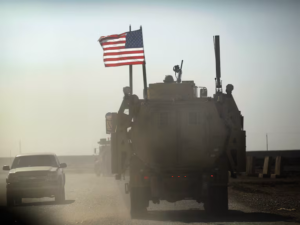
During Trump’s second term, the U.S. may reduce its military presence in certain regions, but significant reductions in the Middle East appear unlikely. For instance, in 2010, the U.S. had over 100,000 troops in Iraq and around 70,000 in Afghanistan. Today, the total number of U.S. troops in the Middle East is approximately 45,000. Of these, 2,500 are in Iraq, and 900 are in Syria (a number now estimated to have risen to 2,000). The remainder are stationed across bases in Bahrain, Djibouti, Jordan, Kuwait, Qatar, and the United Arab Emirates. Before the October 7 attacks, the U.S. had reduced its military presence in the Middle East to approximately 30,000 troops, but the need to increase this number by an additional 15,000 arose afterward[6]. It is important to note that the majority of the U.S. military presence in the Middle East is concentrated in the Gulf region.
Conflict Between Iran and the Gulf Region
In addition to ensuring Israel’s security, the United States has long been highly sensitive to safeguarding energy resources in the Gulf region. For nearly 150 years, the Gulf was under British protection. However, following Britain’s withdrawal from the region after World War II (1939-1945), the United States sought to fill the resulting security vacuum. In 1968, due to a financial crisis, Britain announced its intention to fully withdraw from the Gulf region by 1971, and the U.S. assumed responsibility of ensuring the region’s security[7]. The importance the U.S. places on the Gulf region is evident from the 1980 Carter Doctrine, which says: “Any attempt by an outside force to gain control of the Persian Gulf region will be regarded as an assault on the vital interests of the United States of America [8].”
Iran’s ambitions regarding the Gulf region have always been prevalent. Initially, tensions in the Gulf stemmed from Arab-Persian rivalry, but following the Iranian Revolution (1979), these tensions evolved into a competitive dynamic between Saudi Arabia and Iran. Interestingly, it was the Arab states that first ignited the flames of Arab-Persian nationalist conflict. After World War II, many Arab countries gained significant economic power through oil revenues, which boosted their political and economic influence. During this period, Arab nationalism also experienced a surge. Gamal Abdel Nasser, seeking leadership in the Arab world, launched a global campaign in 1968 to rename the “Persian Gulf” as the “Arab Gulf.” After Nasser passed away from a heart attack following the 1970 Arab League summit, the Baath Party in Iraq continued this campaign. During Saddam Hussein’s rule, the United Arab Emirates provided substantial economic support to Iraq’s efforts in the “Arab Gulf” initiative[9].
The term “Arab Gulf” emphasises the region’s Arab character and identity, strengthening Arab nationalism and appealing to historical Arab pride. The Gulf Cooperation Council (GCC) countries, which distinguish themselves from Iran and have emerged as the dominant economic force in the Gulf region, have since embraced the concept of the “Arab Gulf.” However, Iran, a nation that has historically identified the region as the “Persian Gulf,” is not a country that would quietly accept such a politically motivated change. Egypt’s signing of the Camp David Peace Agreement with Israel on March 26, 1979, created a division within the Arab world, splitting it into two opposing camps. Meanwhile, the rivalry in the Gulf, initially focused on Iraq, shifted toward Saudi Arabia after the First Gulf War (1990-1991). In 1980, on the first anniversary of the Iranian Islamic Revolution, Ayatollah Khomeini declared himself the leader of all Muslims worldwide and made an appeal to Muslims in other countries: “O Muslim nations of the World who are oppressed, arise!” While addressing all Muslims, Iran focused its political efforts on the Shia populations in the Gulf countries by secretly establishing Ithna ‘Ashari (or Twelvers) cells among them. Between 1979 and 1981, the Islamic Republic of Iran covertly sent “representatives” to Gulf countries to incite the local populations against their governments.
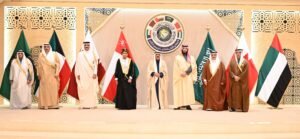
During this period, Khomeini placed particular emphasis on Iraq’s Shia population. In January 1979, even before his return to Iran from France, he issued a fatwa demanding autonomy for Iraq’s Shia population. In this fatwa, Khomeini called on Shia religious leaders in Iraq to support the cause of autonomy for the roughly five million Shia living in the country. These provocative actions played a significant role in Iraq’s decision to invade Iran in September 1980. Iraq hoped its attack would be perceived as a preemptive strike. Khomeini’s assertion of being the leader of all Muslims and Iran’s efforts to organise Ithna ‘Ashari cells among the Shia populations in Gulf countries raised significant concerns for the Gulf states. In 1981, Saudi Arabia, Bahrain, Oman, Kuwait, Qatar, and the United Arab Emirates joined forces to form the GCC. It was established to prevent the spread of the Iran-Iraq War and to counter the Islamic Republic of Iran’s attempts to undermine their regimes[10].
Today, the most significant regional rivalry in the Middle East is between Iran and Saudi Arabia. Tehran has historically held a dismissive view toward Riyadh but also toward its other neighbors in the Gulf region. It is said that Khomeini referred to the Saudi royal family as “the followers of the camel grazers of Riyadh and the barbarians of Najd, the most infamous and the wildest members of the human family[11].” Khomeini’s hostility toward the Kingdom remained unwavering throughout his life, and he never softened his anti-Saudi rhetoric. The tension between Iran and Saudi Arabia has indeed escalated further over time. At this stage, the collapse of the Syrian regime and the severe defeats suffered by Iran-backed organisations like Hamas and Hezbollah, which acted as proxies against Israel, might lead Iran to shift its focus more intensely toward the Gulf region. In short, Tehran may adopt a more aggressive policy in this specific region. Losing influence in Syria, Lebanon, and Palestine may not signify a retreat for Iran but rather a recalibration of its regional ambitions. Iran and Saudi Arabia, the central actors in the Gulf conflict, collectively hold approximately one-third of the world’s oil reserves and one-fifth of its natural gas reserves. Saudi Arabia’s 39-year-old leader, Mohammed bin Salman (MBS), described Iran’s 85-year-old Supreme Leader Ali Khamenei as “the new Hitler of the Middle East,” while Khamenei refers to MBS as an inexperienced “criminal” leading Saudi Arabia toward destruction.
Over the past two decades, Iran and Saudi Arabia have been on opposing sides in nearly every conflict in the Middle East. In Iraq, Syria, Yemen, Lebanon, and Palestine, the two nations supported different factions. Until the collapse of the Bashar al-Assad regime in December 2024, Iran had largely succeeded or gained advantages on nearly all fronts through its hard power. However, after the fall of the Syrian regime, the Islamic Republic faced losses in all areas except Yemen. Between 2015 and 2019, Saudi Arabia spent $200 billion to push back the Houthis, allies of Iran. While Saudi intervention in the Yemeni war resulted in tens of thousands of deaths, the Kingdom failed to achieve their desired outcome. The Houthis, who chant “Death to America and Israel,” have attacked ships in the Red Sea, rendering a critical passage with an estimated $200 billion trade potential nearly dysfunctional. A coalition of over 20 nations, including the United States, is actively combating Houthi attacks to protect vital maritime trade routes.
Conclusion
While Iran’s proxy forces in the Mediterranean have been rendered ineffective for now, the Houthis in Yemen continue to launch missile attacks on Israel. This clearly demonstrates that, despite losing in Syria, Lebanon, and Israel, Iran will not easily back down in the Gulf region and Yemen. In 2019, Iran attacked Saudi Arabia’s oil company, ARAMCO, proving its capability to strike the kingdom. Essentially, without the military backing of the United States, Saudi Arabia cannot defend itself against Iran, no matter how many billions it spends on its defense systems. The smart cities Riyadh is attempting to build with billions of dollars could be destroyed by relatively unsophisticated missiles and drones deployed by Iran and its proxies. Through the Carter Doctrine, the United States has assumed the responsibility of safeguarding the Gulf countries against external threats. It cannot leave an energy hub that holds 65% of the world’s oil reserves vulnerable to Iran and its global rivals, China and Russia. While Iran represents a regional threat that the U.S. can manage, Beijing and Moscow are not. Undoubtedly, once the U.S. withdraws from the region, Vladimir Putin and Xi Jinping will immediately attempt to fill the resulting void. The Middle East’s rich natural gas and oil reserves make it an attractive target of all global actors. Even India might set its sights on the wealth of the Middle East in the future. Had the British anticipated the oil crisis triggered by the Arab-Israeli War of 1973 — which caused oil prices to skyrocket by 400% within a year, from $2.90 to $11.65 per barrel — they would not have withdrawn from the Gulf region in 1971, nor would they have likely recognized the independence of these countries. While the British “political mindset” led to this error, Trump and the Americans, who understand the value of wealth and economic stability, are unlikely to repeat it at this stage.
During his election campaign, Trump declared that he would “not start new wars and would seek to end existing ones.” Based on this, the United States is likely to adopt a cautious approach regarding Iran, pressing for the abandonment of its nuclear program without resorting to direct military action. In the short term, Iran will no longer pose a threat to Israel, but it will remain a persistent threat to the Gulf region. As long as Iran is perceived as a threat to the Gulf region, the U.S. will maintain its presence in the Middle East to ensure the external security of the Gulf. During President Trump’s first term, the Abraham Accords (2020) were signed with his direct endorsement and witness, with the aim of establishing peace between Israel and Arab states and bringing stability to the region. The agreements Israel reached under the framework of the Abraham Accords with Bahrain, the United Arab Emirates, Morocco, and Sudan are intrinsically linked to the physical presence and military influence of the United States in the region. As the primary architect and advocate of the Abraham Accords, President Trump is well aware of this reality on the ground.
The recent collapse of the Syrian regime and the current dominance of jihadist factions in the country heighten the likelihood of a Sunni-Shia conflict in Syria akin to the one experienced in Iraq. For now, the jihadist forces, cautiously moderated by Turkey and employing strategic rhetoric to influence the U.S. and the West, will likely show little tolerance for Kurds, Christians, or Druze minorities once they fully consolidate power. In the first phase, jihadist groups will dismantle the religious and ethnic structures within Syria. In the second phase, they will turn their attention to Israel. It is important to note that the animosity Sunni jihadist organizations harbor toward Israel is far more entrenched and profound than that of Alawites and Shiites. The only guarantee for the survival of Syria’s religious and ethnic minorities and to prevent jihadist forces from posing a future threat to Israel is for the Kurds, with the support of the U.S. and the West, to secure federal status in Syria, as they did in Iraq. Consequently, the U.S. may need to bolster its military presence in Rojava in the near future.
As long as instability continues in the Middle East, the U.S. is likely to retain its military forces and bases in the region and remain on high alert, as it has done for the past 30-40 years.
Notes
[1] The plan for Iraq’s invasion of Kuwait did not originate during Saddam Hussein’s era. In 1899, under the Anglo-Kuwaiti Agreement, Kuwait came under British protection and remained so until the 1950s. In 1961, the Kuwaiti government appealed to Britain to nullify the 1899 agreement, a request that was accepted. At that point, the then Iraqi dictator Abdul Karim Qassem threatened to annex Kuwait into Iraqi territory through military force, prompting Britain to deploy troops to Kuwait. See: Peter Mansfield, A History of the Middle East, Penguin Books, 2003, p.282.
[2] Fred Halliday, The Middle East in International Relations, Power, Politics and Ideology, Cambridge 2005, p.130
[3] Enid Hill, “The New World Order and Gulf War” in The Gulf War and New World Order, Edited by Tareq Y. Ismael and Jacqueline S. Ismael, University Press of Florida, 1994, p.201
[4] David Ignatius, “In Syria, shocking rebel surge derails a diplomatic gambit,” Washington Post, December 3, 20294
[5] Şadi Hamit, “Why Assad’s fall blindsided Washington,” The Washington Post, December 13
[6] Daniel Byman, “Why the Middle East Still Needs Amerika,” Foreign Affairs, March 12, 2024
[7] Peter Mansfield, A History of the Middle East, Penguin Books, 2003, p.282
[8] David Held & Kristian Ulrichsen, The Transformation of The Gulf, Politics, Economics and The Global Order, Routledge 2012, p.6
[9] Anoushiravan Etheshami & Mahjoob Zweiri, Iran and the rise of its Neoconservatives, the politics of Tehran’s silent revolution, I.B.Tauris, 2007, p.102
[10] Roger M. Savory, “Religious Dogma and the Economic and Political Imperatives of Iranian Foreign Policy,” In Iran At The Crossroads, edited by Miron Rezun, Westview Press, Boulder, San Francisco, Oxford 1990, p.52
[11] Karim Sadjadpour, “The Battle for the Middle East,” Foreign Affairs, October 22, 2024