

Reaching a nuclear agreement between the United States and the Islamic Republic of Iran has long been one of the most difficult and intractable challenges in international diplomacy. It is not simply a matter of negotiations between two governments; it is a volatile intersection of deeply entrenched ideologies, competing strategic visions, historical grievances, and the powerful influence of regional and domestic political actors.
Each side brings to the table its own political constraints, national pride, and long-term security concerns. Adding further complication are third parties—especially Israel and hardline factions in both countries—that are not at the table but exert enormous influence on the terms, expectations, and likelihood of any agreement. With Israel’s recent attack on Iran on June 13 and the subsequent military escalation, the prospect of a diplomatic agreement has grown increasingly remote. The question is not longer just what happens if there is no deal, but whether the region is now sliding irreversibly toward a broader military confrontation, with a possible U.S. intervention as Donald Trump put it on his social media.
A Complex Web of Stakeholders
Negotiating with Iran is not merely a bilateral endeavor. The assumption that two governments—Washington and Tehran—can sit across the table and hammer out an agreement is far removed from political reality. In the United States, any administration pursuing diplomacy with Iran must consider not only Congress but also the prevailing mood within the Republican Party and public opinion. On Iran’s side, even if the president and foreign minister appear open to talks, the true power often lies with Supreme Leader Ayatollah Ali Khamenei and the Islamic Revolutionary Guard Corps (IRGC), who are skeptical of any engagement with the West.
In Washington, the Republican Party has adopted a near-unified stance against any deal that allows Iran to enrich uranium on its soil. President Donald Trump, who repeatedly rejected the 2015 Joint Comprehensive Plan of Action (JCPOA), calling it one of the worst agreements ever signed by the United States, has stressed that any future agreement with Iran must ensure zero enrichment, signaling a return to a maximalist position that leaves little room for compromise.
For many Republicans, allowing Iran to continue even limited enrichment is tantamount to granting it a path to nuclear weapons. They argue that any such concession would not only fail to stop Iran’s nuclear ambitions but also embolden the regime, bolster its regional proxies, and destabilize the region further. Within this framework, diplomacy is often seen as appeasement, especially if it falls short of full dismantlement of Iran’s nuclear program.
Israel’s Strategic Calculus: An Ally With a Veto
The influence of Israel cannot be overstated when it comes to U.S. policy on Iran. As a staunch ally of the United States, Israel exerts considerable pressure on Washington’s decision-makers—both directly and through its powerful advocacy networks in the U.S. Congress. For years, Israeli leaders have warned that Iran’s nuclear program poses an existential threat. The notion of a nuclear-capable Iran is simply unacceptable to the Israeli establishment, regardless of whether Iran actually assembles a nuclear weapon.
Israeli officials across political lines have consistently argued for a policy of zero enrichment. They point to the so-called “Libya model” as a precedent—wherein Muammar Gaddafi agreed to fully dismantle his weapons programs in exchange for normalization with the West. Israel has made it clear that it does not support a return to the JCPOA or any agreement that permits Iran to maintain the infrastructure necessary to build a nuclear bomb, even under strict monitoring.
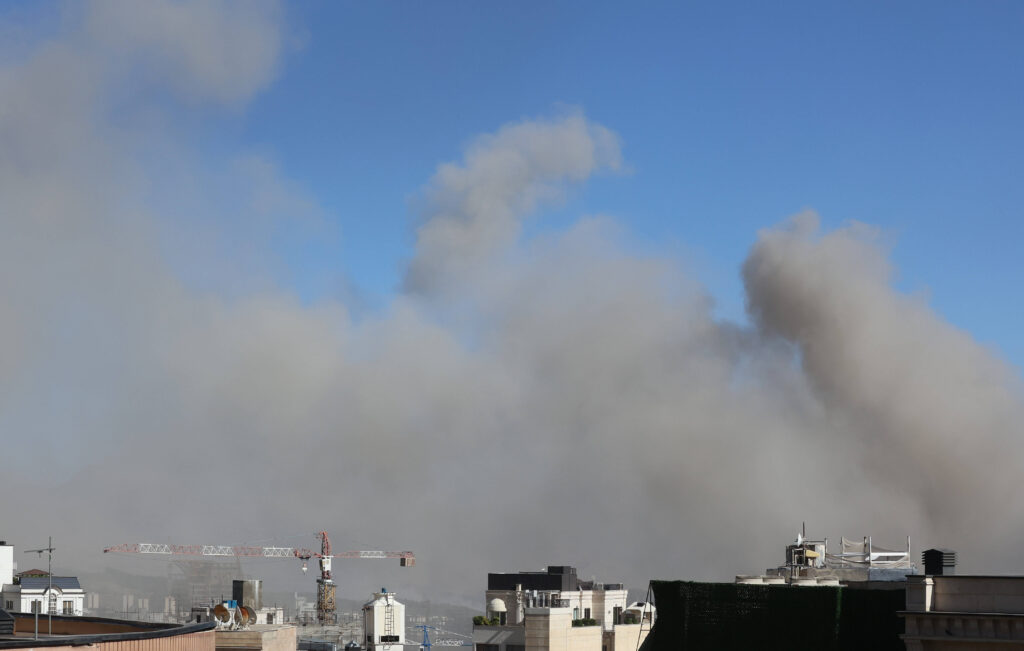
The Israeli government’s calculus has also been affected by recent shifts in the region: Syria’s Bashar al-Assad, once a key Iranian ally, is isolated; Hezbollah is overstretched; and economic protests are roiling Tehran. Against this backdrop, Israel appears to have concluded that the current moment presents a rare strategic window to strike at Iran’s nuclear ambitions–not through diplomacy, but through force. The June 13 attack on Iranian territory and supposed nuclear sites suggests that Tel Aviv has moved from deterrence to direct action, signalling a willingness to escalate rather than wait for a diplomatic outcome.
Iran’s Internal Politics: Strengthening of the Hardliners
From Tehran’s perspective, any agreement that limits its right to enrich uranium is deeply problematic. Iranian leaders argue that enrichment is not only their sovereign right under the Non-Proliferation Treaty (NPT) but also a crucial aspect of national pride and technological advancement. While some Iranian officials have signaled a willingness to negotiate, the dominant voices in Tehran—especially those aligned with the IRGC—view Western pressure as an attack on the Islamic Republic’s autonomy and dignity.
Within this context, a deal that requires the dismantling of centrifuges, the halting of enrichment, or unrestricted international access to military sites is politically toxic. It would be framed as a capitulation—an image Iran’s leadership cannot afford, especially amid domestic economic hardship and widespread unrest. Any perceived weakness could invite further dissent at home and embolden adversaries abroad.
A Wide Gap Between Expectations
The fundamental obstacle remains the wide chasm between what the U.S. demands and what Iran is willing to offer. Iran has proposed a revival of the JCPOA with minor adjustments and guarantees that the U.S. will not again withdraw unilaterally. This would mean a return to limited enrichment, robust international inspections, and sanctions relief.
But President Trump and his advisors have proposed a new framework entirely—one in which uranium enrichment would take place outside of Iran, potentially in a regional consortium involving countries like Saudi Arabia, Qatar, or the UAE. From Iran’s point of view, this is not a genuine compromise but a non-starter. It strips the country of its sovereignty and leaves it at the mercy of regional rivals. The scale of this divide is not just diplomatic; it is ideological. For Tehran, nuclear independence is tied to national dignity. For Washington under Trump—and for Israel—it is a red line that cannot be crossed. As such, even when the two sides appear to be negotiating, they are often talking past each other, with fundamentally incompatible objectives.
What Happens If No Deal Is Reached?
The collapse of diplomatic efforts has brought the specter of military conflict to the forefront. President Trump has reiterated that the United States will not allow Iran to develop nuclear weapons and has warned of a strong response if Tehran crosses the threshold. However, as the unfolding events of June 13 have demonstrated, it is Israel that has acted first, launching strikes on Iran. This move signals a shift toward unilateral action by regional actors and raises the risk of a broader confrontation, even as Washington weighs its next step.
What was once speculated about a unilateral Israeli strike has now materialized, and it risks drawing the United States into the conflict and if not through direct military involvement, then through intelligence sharing, logistical coordination, and diplomatic backing. Israel has carried out similar operations in the past, including the bombing of Iraq’s Osirak reactor in 1981 and Syria’s nuclear reactor in 2007. However, Iran is a different case: its facilities are dispersed, fortified, and guarded by anti-aircraft systems and ballistic missile deterrents.
The Israeli strikes have already triggered a response from Tehran, and the scale of Iran’s retaliation as seen in missile attacks on Tel Aviv and Haifa, raises serious concerns about escalation. The scale and nature of that response would determine whether the conflict remains limited or escalates into a regional war. Iran could retaliate through its proxies in Iraq, Yemen and Lebanon. It could strike oil infrastructure in the Persian Gulf or even launch missile attacks against Israeli or Gulf targets. While Iran may be constrained by its economic situation and domestic unrest, the leadership might feel compelled to respond to preserve its credibility.
A Tenuous Path Forward
In conclusion, the odds of a peaceful diplomatic resolution between the United States and Iran are increasingly slim. The cancellation of the scheduled talks in Muscat on Sunday, June 15, underscores the collapse of momentum toward dialogue The domestic political landscapes in both countries are tilting against compromise. The U.S. political establishment, particularly under Republican leadership, views any deal that allows enrichment as unacceptable. At the same time Israel is pressing for a decisive blow to Iran’s nuclear program. In Tehran, hardliners remain firmly in control, rejecting any deal that would curtail Iran’s strategic autonomy or be perceived as a sign of weakness.
The gap between the two sides is not just wide—it is foundational. As each side digs in, the risk of miscalculation increases. Without a deal, military confrontation becomes not just possible, but probable. With diplomacy on hold and military operations already underway, the question is no longer whether confrontation can be avoided, but how far will it go. Whether through further Israeli strikes, Iranian retaliation, or the involvement of regional proxies, the consequences or continued escalation could be catastrophic, plunging the Middle East into a broader and more sustained conflict. In the end, diplomacy may still offer a way out—but only if all parties recognize that compromise is not surrender, and that the alternative to negotiation is most likely war.