

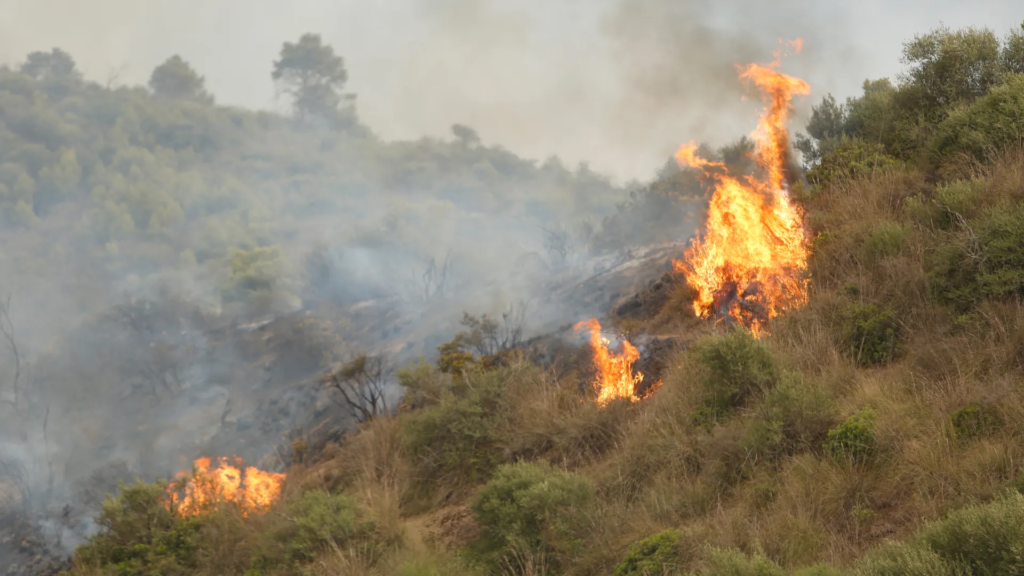

The wildfires that affected several regions of northern and eastern Algeria at the end of August 2026 represent far more than a temporary environmental disaster. Against a backdrop of extreme temperatures, prolonged drought and increasing pressure on forest ecosystems, the fires have exposed a range of environmental, human, economic and institutional vulnerabilities facing the country. Beyond the human toll and the destruction of agricultural land, forests and infrastructure, the crisis raises important questions about Algeria’s capacity to prevent, detect and manage climate-related disasters, particularly in the aftermath of the deadly wildfires of 2021.
The crisis has also reopened the debate over criminal responsibility. President Abdelmadjid Tebboune has called for amendments to the Penal Code to allow the execution of individuals found responsible for deliberately starting forest fires. Yet the death penalty has never been abolished under Algerian law: it remains provided for in the Penal Code, including for certain cases of deliberate arson resulting in death. The key issue is therefore not simply the “reintroduction” of capital punishment, but the potential end of the de facto moratorium on executions in place since 1993, alongside a possible expansion of the circumstances in which the death penalty could be applied. This development raises significant questions concerning criminal law, non-retroactivity, due process guarantees and Algeria’s international human rights commitments.
In this policy note, I have examined the 2026 wildfires through four interconnected dimensions: the environmental and human impact of the disaster, its economic and territorial consequences, the government’s political response, and the legal implications of the renewed debate over capital punishment. The analysis ultimately places the immediate disaster within a broader discussion on climate resilience, risk governance, prevention, institutional accountability and the balance between criminal enforcement and public responsibility.