


The Arab Spring was a series of pro-democracy protests that began in Tunisia in December 2010, following the self-immolation of Mohamed Bouazizi. These massive demonstrations challenged the regime of President Zine el-Abidine Ben Ali before quickly spreading across North Africa and the Middle East (MENA). The outcomes varied significantly across the region. While Tunisia emerged as a relative success by transitioning to democracy, the rise of Kais Saied in 2019 has led the country towards a return to authoritarianism. In Egypt, the protests led to the ousting of President Hosni Mubarak, but subsequent political turmoil and a military coup on July 3, 2013, undermined democratic progress. The country reverted to a level of authoritarianism not seen since the 1960s under President Abdel Fattah el-Sisi, establishing a regime with limited political freedoms. Libya descended into civil war following NATO’s intervention against Muammar Gaddafi’s regime, which was overthrown in October 2011, resulting in ongoing instability. The country remains divided, in a state of political chaos with competing governments and militias fighting for control in Benghazi and Tripoli. This conflict has also escalated human rights violations and contributed to the global refugee crisis. In the Levant, initially peaceful protests in Syria against Bashar al-Assad’s regime escalated into a brutal civil war, causing widespread devastation and international intervention. This also led to the displacement of many people seeking refuge in neighbouring countries like Iraq, Turkey, Lebanon, Jordan, and across Western Europe. The rise of ISIS, which declared a caliphate in 2014 in northeastern Syria, forced many to flee for their lives. Although ISIS was defeated in Syria in 2017, Damascus remains under an authoritarian regime.
Other countries experienced a second wave of protests following the initial Arab Spring. In December 2018, nearly eight years after the Arab Spring began, protests erupted again, first in Atbara, Sudan, due to rising fuel and bread prices. These widespread demonstrations eventually led to the ousting of Omar al-Bashir on April 11, 2019, after three decades of authoritarian rule. Unfortunately, this event did not yield positive results as, on April 15, 2023, the country was plunged into civil war. Algeria was the second country to denounce its government’s authoritarianism, characterised by restrictions on civil and political rights and the absence of separation of powers, with the president concentrating all authority, steering the country toward dictatorship. Longtime President Abdelaziz Bouteflika resigned in April 2019 amid widespread protests, preventing him from seeking a fifth term. This marked a significant challenge to the military-civil power structure that had dominated Algerian politics for decades. However, the political system remains in the hands of the military, and established elites retain significant influence over political processes. Further east, in Lebanon, Prime Minister Saad Hariri resigned amid widespread protests against corruption, economic mismanagement, and sectarian politics. Unlike what is commonly thought about the origins of this uprising, the Whatsapp tax was not the sole reason for the movement. The misconception that the October 17 revolution in Lebanon was triggered solely by taxes on WhatsApp usage needs clarification. In reality, the protests were the culmination of numerous grievances: widespread government failures, rampant corruption, inadequate public services, and high unemployment. The uprising was a direct response to Lebanon’s disastrous economic and financial conditions, aggravated by the inertia of politicians and their inability to manage the crisis effectively. The WhatsApp tax served as a catalyst, highlighting the broader frustration and dissatisfaction of the Lebanese population with the status quo. Although the 2019 protests in Lebanon called for an end to corruption and sectarianism, the country remains politically unstable. Meanwhile, Iraq’s Shiite population began protesting against the predominantly Shiite government. The uprising, known as the “Tishreen Movement,” spread across the country, condemning the challenges Iraq has faced since the 2003 American invasion. In response to these waves of protest, Iraqi Prime Minister Adel Abdel-Mehdi proposed resigning if a new government could be formed.
This research investigates the complex interaction between social networks, protest movements, and state responses in the context of the Arab Spring of 2011 and 2019, focusing on the case of four countries: Tunisia, Syria, Algeria, and Iraq. It explores how digital platforms simultaneously empower citizens to challenge authoritarian regimes while exposing them to heightened risks of surveillance and repression, shaping the trajectory of democratic transitions in these countries. The study underscores the critical role of international media coverage in shaping global perceptions and influencing support for these movements. Additionally, it addresses the enduring challenges posed by government control over information and the broader socio-political landscape, which continue to complicate efforts toward freedom and democracy in the region.
The Jasmine Revolution and the Power of Media Mobilisation
A. The Emergence of the Arab Spring in Tunisia
The pivotal event that triggered the Arab Spring took place in Sidi Bouzid, Tunisia on December 17, 2010 when Mohamed Bouazizi, a young street vendor and sole provider for his family of seven, tragically set himself on fire to protest against police corruption and harassment. His act stemmed from the repeated arbitrary confiscation of his vegetable stand due to a lack of permit, which symbolised the profound frustrations of Bouazizi and many Tunisians regarding unemployment, economic challenges, food inflation, corruption, and the lack of political freedoms under President Zine el-Abidine Ben Ali’s 23-year rule. This act ignited widespread protests across the country, demanding jobs, better living conditions, human rights, and democratic reforms, while rejecting dictatorship and censorship. Bouazizi’s self-immolation became a poignant representation of the struggles faced by Tunisia’s youth marginalised by Ben Ali’s authoritarian regime. The escalation of street protests culminated in the president’s abdication and flight to Saudi Arabia in January 2011, ending his presidency since 1987.
B. The Economic and Social Evolution of Post-Revolution Tunisia
After the 2011 revolution, Tunisia’s interim government took significant steps, including recognizing new political parties and dissolving Ben Ali’s Constitutional Democratic Rally (RCD). Despite these moves, demands for further reforms continued. Although the country underwent several political transitions with elections in 2011, 2014, 2018, and 2019, it faced numerous economic challenges. As the UNDP highlights, “Economic growth slowed, particularly after the 2008 global crisis, while unemployment surged, especially among young graduates (30% compared to a national average of around 15%). Despite widespread discontent, authorities have been hesitant to implement the necessary socio-economic reforms since 2010. Between 2011 and 2019, Tunisia’s annual economic growth averaged 1.8%, a significant decrease from the 4.2% average between 2000 and 2010. In 2020, the country faced a double-digit recession due to COVID-19, with economic activity declining by -2.1%, -21.7%, and -6% in the first, second, and third quarters, respectively.”The high cost of living and increasing difficulties in accessing decent jobs intensified the country’s economic insecurity, placing nearly half a million Tunisians at risk of falling below the poverty line, according to a UNDP simulation published in June 2020. A decade ago, Tunisia’s revolutionary fervor inspired hopes for democratic reform throughout the MENA region. The term “Dégage!” became a global emblem of resistance against dictatorship. While Tunisia is often cited as a relative success story of the Arab Spring, these achievements are now in jeopardy. The recent slide toward authoritarianism, exemplified by Kais Saied’s consolidation of power since his 2019 election, threatens to undo democratic progress, while the ongoing economic crisis continues to pose a major challenge to the country’s stability.
In the context of Tunisia’s political landscape, one party has notably adapted and exerted significant influence. Founded in 1981 as the Islamic Trend Movement and legalized in 2011, Ennahda became a key player in government coalitions until 2019. The party gained prominence after the Tunisian revolution, securing a majority in the October 2011 elections. Ennahda’s members, Hamadi Jebali and Ali Laarayedh, served as interim prime ministers from December 2011 to 2014. However, Ennahda has since faced a decline in public support, attributed to criticisms of its economic policies and perceived failure to tackle corruption effectively. This trajectory reflects Ennahda’s broader role in Tunisia’s democratic evolution. While originally founded on Islamist principles, the party’s shift towards a pragmatic approach highlights its response to the complex and shifting political environment. This adaptability is vital in a climate where public engagement with democracy persists despite ongoing political and economic challenges.
In 2019, President Kais Saied came to power with significant backing from Tunisia’s youth, raising hopes for a new post-authoritarian era. However, hopes for a new post-authoritarian era in Tunisia have gradually faded with his decision to seize all executive and legislative powers on July 25, 2021, simultaneously suspending Parliament. In the same vein, Saied ensured the adoption of a constitutional reform establishing a presidential regime. He restricted the powers of the Assembly and weakened political parties. Furthermore, the legislative elections of December 17, 2022, aimed at advancing Saied’s reforms, did not achieve the desired effect. They marked the first significant setback for the president since coming to power, with an 89% abstention rate in the first round. This was compounded by the disinterest of young voters, with “only 5.8% of 18-25 year olds voting, a sharp drop from a participation rate of over 37% observed in the 2019 presidential election.” Several factors contributed to this decline: a lacklustre campaign, widely unknown candidates, and an unprecedented economic crisis with inflation exceeding 10%. To worsen these issues, negotiations with the International Monetary Fund for a crucial $1.9 billion loan have been stalled since December 2022, deepening Tunisia’s fiscal challenges. Unfortunately, the country has rapidly descended into an openly authoritarian regime, undoing the hard-won gains of 2011. Once viewed as a beacon of hope and democratic aspiration, Tunisia under President Kais Saied’s rule now bears striking similarities to Ben Ali’s repressive tactics. Disillusionment is deep as Tunisians fear a return to repressive measures, with the current president dismantling post-Arab Spring institutions to consolidate power under the guise of grassroots democratic reconstruction. This concentration of power has sparked sharp criticism, notably from Ennahda’s leader Ghannouchi, who was arrested by plainclothes officers at his home on April 17, 2023, an action condemned by Human Rights Watch for its lack of due process. This drift towards authoritarianism represents a radical departure from the promising trajectory Tunisia was on after 2011, highlighting the fragility of democratic transitions in a region plagued by economic problems and political polarisation.
C. The Rise of Citizen Journalists
Social media is distinguished by its ability to rapidly connect individuals through messages, photos, and other forms of communication, as well as for its diverse methods of engagement and dissemination. The events of 2011 highlight the crucial role of social media in uniting Tunisia against the authoritarian regime of President Zine el-Abidine Ben Ali. Young Tunisians were at the forefront of this digital activism. Platforms like Facebook and Twitter became one of the few means of expressing grievances, allowing them to demand social, political, and economic change in the country while voicing their frustration with government and police mistreatment. The online war between activists and the government intensified when middle and upper-class dissidents allied with the protesters. The situation worsened on social media with the publication by the blog Nawaat.org of WikiLeaks cables, revealing the extent of government corruption and Western complacency. This blog became a crucial source for international media, connecting citizens to the world. Cyberactivists joined the street protests, with demonstrations in Tunis in solidarity with Sidi Bouzid broadcast live via mobile phones. Videos and posts spread rapidly on social media, with the hashtag #sidibouzid circulating on Twitter with over 13,000 tweets. Hashtags like #Bouazizi and #sidibouzid facilitated, spreading the message of resistance and desire for change. Despite the government’s attempts to suppress the protests by arresting bloggers and prominent online figures, these efforts only strengthened the movement. Thus, cyber-dissidents from the Tunisian diaspora played a crucial role in bypassing censorship and relaying information.
Social media played a crucial role in the fall of Ben Ali’s regime. Initially essential for mobilising protests and exposing government abuses, platforms like Facebook and Twitter allowed citizens to demand political reforms. However, after Ben Ali’s fall and the rise of President Kais Saied, challenges remain, including concerns about online misinformation, reduced freedom of expression, and crackdowns on opponents of the regime.
From Peaceful Protests to Repression by the Syrian Regime
A. The Roots of the Syrian Uprising
The conflict in Syria stands out as one of the most complex outcomes of the 2011 Arab uprisings. The Assad family’s regime nearly collapsed twice—first in the spring of 2013 and then in mid-2015—but managed to survive due to external interventions. Understanding how the Assad family came to power is crucial to grasping the Syrian people’s anger: Hafez al-Assad, a Ba’athist leader, took power in 1970, consolidating authority in the presidency and elevating the Alawite minority, a sect of Shia Islam. The regime not only maintained autocratic rule but also operated kleptocratically, using patronage to ensure loyalty. Twelve years after Syrians began protesting against the decades-long Assad family dominance, the country remains deeply mired in conflict. The toll is staggering, with hundreds of thousands dead and nearly thirteen million displaced—over half of the pre-war population. Today, Syria is fractured as a result of the civil war that has ravaged the country and affected the Syrian people.
B. The Paradoxical Consequences of the Syrian Uprising
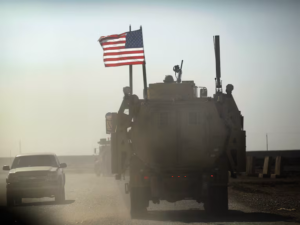
Anti-government protests quickly escalated into a civil war affecting the entire country. By 2012, various opposition groups had formed rebel brigades that captured key cities, including Aleppo. This led to the rise of ISIS (Islamic State of Iraq and Syria) and other Islamist groups. In April 2013, the Islamic State of Iraq (ISI) rebranded as ISIS, establishing control over parts of Syria. This situation led to the creation of the Islamic State’s caliphate in 2014, with Raqqa as its capital. The rise of terrorism prompted foreign intervention, including by the United States. As Assad’s army faced increasing losses and desertions, the regime increasingly relied on support from Iran and Russia. Russia also provided essential diplomatic backing to Assad, often using the 2011 NATO intervention in Libya and its consequences to veto UN Security Council measures against the Syrian air force. While Moscow claimed its airstrikes targeted ISIS and Al-Qaeda, analysts observed that many of these strikes targeted other rebel groups, including some supported by the U.S. and those interspersed with Al-Qaeda affiliates near front lines with Assad’s forces. This intervention significantly aided the government in consolidating its control over the territory.
Furthermore, the destruction wrought by the civil war severely impeded Syria’s economic recovery, which deteriorated further in 2023. This ongoing economic decline reflects the country’s fragility and the government’s continued inability to address the needs of its citizens. The conflict has ravaged infrastructure and severely paralysed agricultural, industrial, and service sectors of the economy. The war has also altered the governance of these sectors, diverting most resources to serve various de facto authorities at the expense of the majority of the population. Despite relative stability in many areas, economic production has worsened, with declining growth rates. Although agricultural production rebounded in 2023 due to better weather conditions compared to the near-record of 2022, the sector was severely affected. The massive displacement of farmers and significant damage to infrastructure and irrigation systems led to reduced crop yields. The conflict-related disruptions also severely impacted foreign trade. The collapse of domestic industrial and agricultural production increased Syria’s reliance on imports.
More than half of Syria’s pre-war population has been displaced by the ongoing conflict. About seven million people are displaced within Syria, while an almost equivalent number have fled to other countries. Neighbouring countries have been heavily impacted, including Lebanon, which hosts about 800,000 Syrians with a population of just over five million. Jordan houses over half a million Syrians and has had to block new refugee entries. Turkey hosts over three million refugees, straining its resources. With limited job and educational opportunities and little hope of returning home soon, over one million asylum seekers and refugees have travelled to Europe, contributing to the largest migrant and refugee crisis since World War II, according to the United Nations.
C. The Management of Information by Social Media in the Syrian Conflict
Protesters harnessed social media platforms like Facebook, Twitter, and YouTube to disseminate information and mobilise support. Opposition movements grew through the exchange of information and messaging. In response to this new form of activism, regimes targeted by public discontent struggled to counter the rising popularity of these communication tools. One response adopted by governments, particularly Bashar al-Assad’s regime, was repression and violence against activists. A 2017 essay by the Hoover Institute examines the experiences of two individuals, Kassem Eid (activist) and Qutaiba Idlbi (journalist), regarding the role of social media as both a catalyst for activism and a tool of state repression. Kassem Eid grew up under the oppressive rule of Hafez al-Assad, a time when state-controlled media isolated Syrians from global realities. Despite this, his exposure to books and newspapers broadened his awareness of global injustices, inspiring him to denounce the Assad regime. When Bashar al-Assad came to power, the internet initially offered new possibilities for connection but quickly became a tool for surveillance and manipulation by the regime. Qutaiba Idlbi, a journalist covering the uprising, was arrested and interrogated multiple times for his work. His encounters highlighted the regime’s meticulous monitoring of social media to suppress dissent and control public opinion. Idlbi’s resilience in exposing the regime’s atrocities through digital platforms underscored the risks activists face when using social media.
Throughout the Syrian conflict, social media platforms like Facebook and Twitter enabled activists to organise protests, broadcast live testimonies of injustices, and mobilise international support. This digital activism galvanised global solidarity for the Syrian uprising, demonstrating its power to amplify marginalised voices and challenge authoritarian regimes. However, Bashar al-Assad’s regime skillfully used social media for surveillance and propaganda, deploying tactics to counter opposition narratives and maintain control over public discourse. This dual role of social media highlights its complex impact on the Syrian uprising, empowering activists while exposing them to increased risks of surveillance, repression, and manipulation by state actors and extremist groups. The experiences of Syrian activists with social media underscore the need for a nuanced understanding and strategic responses to digital tools in conflict zones. While social media allows citizens to challenge power structures and engage in political discourse, its susceptibility to misuse presents ongoing challenges for regional stability and global security.
The Nuanced Successes of the Hirak in Algeria
A. The Origins of the Hirak in the Country’s Historical Context
Attention then shifted to Algeria, with many predicting it would be the next country to rise against its government. The country’s severe socio-economic issues, combined with governmental paralysis due to President Abdelaziz Bouteflika’s illness, seemed to support this prediction. In 2010 alone, Algeria experienced 10,000 riots. On January 5, 2011, a new wave of more violent protests erupted nationwide, triggered by a 30% increase in the prices of essential foodstuffs like cooking oil and sugar. The rioters, mostly marginalised youth, vandalised buildings including banks, shops, businesses, government offices, schools, and libraries. In some suburbs, they set up roadblocks to extort money and valuables from passing motorists. Their actions were driven by a sense of abandonment by a corrupt and nepotistic regime that restricted political participation and democratic freedoms. In response, the Algerian government only reduced the prices of oil and sugar by 41% instead of addressing the real demands of the population. The regime’s main strategy to quell protests was to use hydrocarbon revenues to distribute profits. However, this does not fully explain why the country did not follow Tunisia’s 2011 example. Rather, one can look to two traumatic events in Algeria’s history that have shaped contemporary Algerian sociey to understand this reluctance: the War of Independence (1954–1962) and the Algerian Civil War (1991–2002).
The Algerian War of Independence was fought against French colonial domination, which lasted over 130 years. The French implemented harsh policies against the Algerian people, including forced labour, discrimination, and land confiscation. The liberation process from French occupation was marked by extreme violence: The French army used torture, summary executions (e.g., the October 17, 1961 massacre), and mass internment camps to suppress the Algerian nationalist movement. The National Liberation Front (FLN) also employed guerrilla tactics to counter French repression. The conflict resulted in a significant loss of life, “estimated between 500,000 and one million Algerians, out of a pre-war population of only three million”. This situation also led to divisions within Algerian society, pitting the harkis, loyal to France, against different factions within the independence movement. A few years later, the country plunged into a dark period known as the “Black Decade” or the Algerian Civil War. This conflict was triggered by the cancellation of the 1991 elections, which the Islamic Salvation Front (FIS) was poised to win. The government’s refusal to acknowledge the election results led to civil war, with the FLN opposing the FIS and various terrorist groups that emerged during this period. The conflict was marked by extreme violence, including massacres, bombings, assassinations, and human rights violations. Both government forces and various Islamist groups committed atrocities, resulting in the deaths of over 100,000 innocent civilians. The Black Decade deepened existing social divisions caused by the War of Independence. Additionally, pervasive distrust and trauma affected Algerian society. The conflict left deep psychological scars, with many Algerians experiencing lasting trauma that still influences national consciousness today. Algeria’s reluctance to join the 2011 wave of protests can largely be attributed to its recent historical context. These experiences left a lasting legacy of fear of instability and conflict, shaping a cautious approach to dissent and protests.
B. The Persistence of the Political System in Algeria
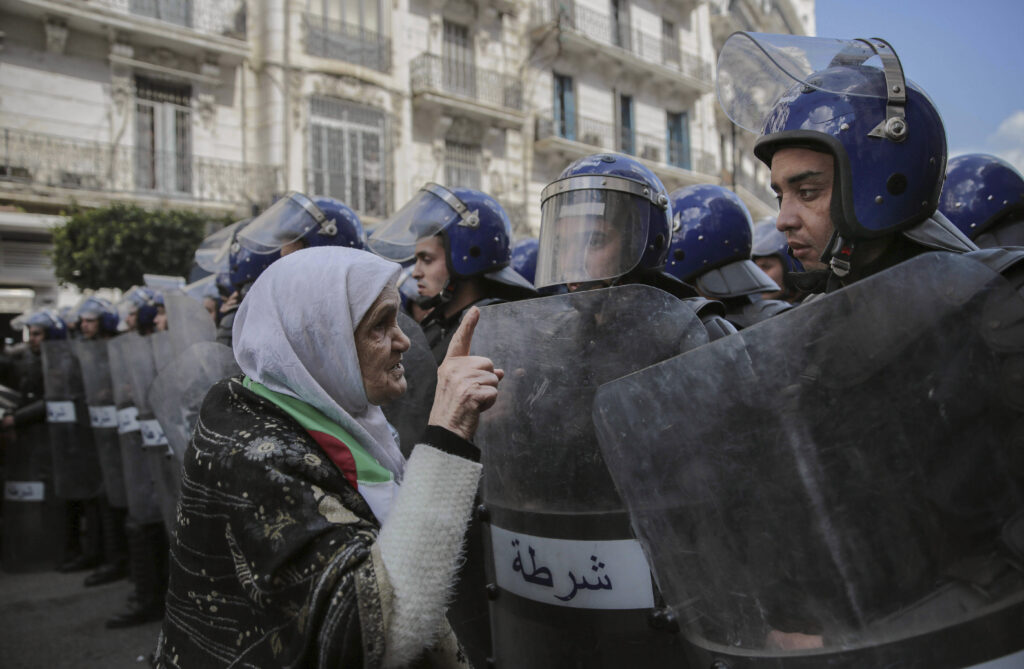
History might have suggested that the Algerian people would not mobilise to challenge government corruption. However, on February 22, 2019, President Abdelaziz Bouteflika’s bid for a fifth term triggered the “Hirak” movement, also known as the “Revolution of Smiles”. This leaderless, yet organised, the movement transcended ideological, ethnic, and regional divisions, adopting a peaceful stance while demanding the existing system be reformed, including the dominant role of the military in politics. The protests against Bouteflika’s fifth term ultimately forced him to abandon his presidential ambitions. In the political vacuum, the military positioned itself as the arbiter of change. Former chief of staff Ahmed Gaïd Salah quickly pressured Bouteflika to resign on April 2, 2019, claiming that the military would respond to the people’s demands. Salah facilitated the appointment of interim president Abdelkader Bensalah and promised to organise elections swiftly. However, these superficial changes did not satisfy the protesters. Originally scheduled for July 4, the presidential elections were postponed to December 12 due to public pressure, with four candidates who had held political and government positions under Bouteflika’s presidency participating. Abdelmadjid Tebboune came to power amid strong popular dissent, marked by Hirak protests that had forced Bouteflika’s departure after 20 years in office. Former Prime Minister under Bouteflika, Tebboune was elected president in December 2019 elections supervised by the military chief, Ahmed Gaïd Salah, in a controversial political transition. Despite widespread mistrust and a significant boycott, the voter turnout was 39.83%, with Tebboune receiving 58% of the votes cast. The Hirak persisted in its demands for the eradication of corruption and a reduction in the military’s political influence. However, the onset of the coronavirus pandemic in March 2020 temporarily interrupted mass protests. The military took advantage of this to implement unprecedented selective repression against peaceful dissidents, detaining them arbitrarily. Although Algeria continues to face significant economic challenges under President Abdelmadjid Tebboune, the country is striving to diversify its foreign investments and reduce its reliance on dollar transactions, while strengthening ties with the BRICS bloc. On one hand, the government, buoyed by the financial windfall from rising hydrocarbon prices due to the Ukraine war, has introduced socio-economic measures to ease tensions, such as a record budget of $98 billion for 2023 and allocations for unemployed youth. On the other hand, this economic stability remains fragile due to persistently high youth unemployment and growing expectations for deep political reforms.
C. Social Media as Essential Tools for Protest Movements
The Hirak movement in Algeria was closely tied to the influence of social media. Despite official rhetoric downplaying the scale of popular mobilisation, platforms such as Facebook, Instagram, and Twitter played a crucial role in documenting, sharing, and supporting the movement. Social media enabled real-time monitoring of Hirak activities, exposing police repression while breaking down prejudices and countering efforts to minimise the peaceful protest movement. Journalists actively reported these events on these platforms, interacting with their followers and documenting the developments. Communication networks not only served as a platform for expression but also echoed calls for demonstrations. With 23 million social media users in a country of 42 million, these platforms united generations and regions around a common cause. Furthermore, as Algeria restricts journalists’ freedom of expression and censors traditional media, social media filled an information void by providing an alternative source of news. Government-aligned private channels and state television largely ignored the protests, making communication platforms the main sources of information. In response to the Hirak, Algerian authorities initially disrupted internet access and launched pro-regime troll campaigns on social media. Additionally, the government carried out arbitrary arrests of activists for their negative posts about President Abdelmadjid Tebboune.
During the Hirak movement in Algeria, social networks emerged as an essential platform for mobilising against the regime, facilitating widespread protests and challenging state-controlled and issued information. Despite the ousting of President Bouteflika, the country faces ongoing political instability and struggles for genuine democratic reforms. Media continues to play a crucial role in this quest for change by amplifying dissenting voices and shaping public discourse. However, concerns persist about digital rights and government censorship.
The “Tishreen Movement” and Its Impact in Iraq
A. Origins of the Social Movement
Since 2003, Iraq has experienced pivotal events shaping its political landscape. The American occupation imposed de-Ba’athification and introduced a consociational democracy, distributing power along ethnic-sectarian lines. Concurrently, the rise of Al-Qaeda in Iraq and the Sadr Movement’s Mahdi Army fueled Sunni and Shiite extremist factions, respectively. The sectarian struggles from 2006 to 2008, the Anbar protests in 2012-2013, and the ISIS offensive in 2014 further shaped Iraq’s trajectory. The formation of Popular Mobilization Forces (PMF) in 2014 contributed to the defeat of the terrorist group by 2017, while the 2017 Kurdish independence referendum intensified ethnic tensions. Throughout these events, foreign involvement played a consistent role, perceived by some as interventionist and by others as necessary for security. Regional powers like Iran used proxies to advance their agendas. These events highlighted the politicisation of sectarian rhetoric in Iraqi politics. The Tishreen Movement marked a turning point in post-2003 Iraq, distinguishing itself from earlier popular campaigns and civil society efforts for political and economic reform.
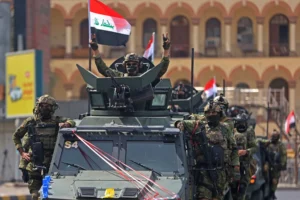
The Tishreen uprising erupted in October 2019 in Baghdad and southern Iraq. Primarily led by youth and lacking a central leader, this movement was the most notable since the 2003 invasion. Protesters demanded the end of the sectarian muhasasa system and widespread corruption, along with the establishment of essential public services, including electricity and water. However, these peaceful protests evolved into revolutionary calls for regime change. In response to the people’s distress, the government chose to violently repress the demonstrators through state security forces and paramilitary groups, resulting in the tragic deaths of approximately 600 to 800 young Iraqis between October 2019 and January 2020. This worsening situation led Prime Minister Adel Abdel-Mehdi to resign in November 2019. Former intelligence chief Mustafa al-Kadhimi succeeded him, promising to address the peaceful protests and their demands, though this did not materialise.
The 2019-2020 protest movement is notable for several reasons. Firstly, the legitimacy crisis of the post-2003 Iraqi political system worsened with the war against ISIS, leading to increased cooperation between state security forces and paramilitary units like the Hashd al-Shaabi (Popular Mobilization Forces). These groups brutally suppressed the protests. Additionally, the Tishreen Movement exposed an unusual intra-Shiite conflict. Unlike post-2003 violence that often pitted Sunnis against Shiites, Arabs against Kurds, or the state against insurgents, this time the Shiite-led state apparatus clashed with the population of the same religious branch from Baghdad to southern Iraq. Confrontations included long-standing rivalries among Shiite political parties, paramilitaries, and armed groups, including supporters of Muqtada al-Sadr and elements of Hashd al-Shaabi. External influences exacerbated clashes between protesters and security forces, highlighting Iran’s support for the government and paramilitary groups while the United States supported the right of protesters to demonstrate. Finally, the Iraqi political class underestimated the determination of the mass youth-led movement, which refused to negotiate a resolution.
B. Socio-Economic Challenges and the Eclipse of the True Objectives of Protests
Despite a decrease in public demonstrations due to violence, the COVID-19 pandemic, and economic pressures, the protest movement in Iraq remained active until 2021, still capable of mobilising significant demonstrations. The movement, which continues to enjoy broad public support, focuses on demanding accountability for violence against activists. A June 2021 survey by EPIC revealed that over 70% of Iraqis supported the protesters, with 31% having participated in at least one demonstration since October 2019. This support extends to the Kurdistan region, which also experienced anti-government protests, reflecting widespread dissatisfaction with corruption and mismanagement by ruling parties. The pro-reform movement in Iraq is characterised by its determination and strategic approach. Activists understand the long-term commitment required to push for reforms, emphasising the importance of maintaining moral integrity, educating the public, defending human rights, and preserving the movement’s inclusive identity. Economic challenges and high youth unemployment highlight the urgency of reforms. Leading activists acknowledge that achieving significant change will require sustained efforts over several electoral cycles. The movement’s importance, prominence, and lasting impact have overshadowed other change initiatives. Indeed, the end of Adel Abdel-Mehdi’s regime was largely symbolic, as other demands for change from the uprising were not addressed. Nevertheless, the Tishreen movement directly led to the decision to hold early elections in Iraq in 2021. This result was influenced by several factors, including increasing tensions leading to confrontations between the U.S. and Iran, notably marked by the January 2020 assassination of Qassem Soleimani, commander of the Quds Force of the Islamic Revolutionary Guard Corps. Growing public opposition to Iranian interference, the Iraqi government’s gradual efforts to reduce the political influence of the PMF, and factions aligned with Ayatollah Ali Sistani within Shiite militias reflect the impact of a rebellious youth challenging Iraq’s established political hierarchy. The parliamentary defeat of the pro-Iranian Fatah Alliance, which saw its number of seats drop from 48 in 2018 to 17 in the October 2021 elections, illustrates how early elections can reshape Iraq’s political dynamics.
C. The Fundamental Role of the Diaspora on Social Media
The movement did not merely wait for the government to grant rights to the Iraqi people or limit its demands to basic needs such as electricity, water, and public services. Instead, it boldly proclaimed: “I am going out to claim my rights.” Tishreen stands out from the Arab Spring revolutions, the Iranian revolution against the Shah, and other popular movements that overthrew various regimes around the world. Although the demands aimed to overthrow the Iraqi political system, the Tishreen movement did not seek to dismantle the entire political structure. Instead, the Tishreen activists focused on how to reform and modernise the current political system while seeking to preserve its democratic foundations. The movement’s strength lies in its ability to break the fear of authority and instil fear in the authorities regarding the people. Additionally, the role of the Iraqi diaspora on social media was crucial. The Tishreen uprising resonated deeply with the diaspora, which was initially exposed to the protests through platforms such as Facebook, Twitter, Telegram, Clubhouse, Instagram, and WhatsApp, connecting with friends and family in Iraq. Social media played a vital role in raising awareness, organising protests, and amplifying grievances that fueled Tishreen. They served as a virtual battleground where activists contested official narratives and shared firsthand accounts of the unrest, bridging geographical divides and fostering global solidarity efforts. They also used digital platforms to raise awareness of Tishreen’s political goals, document human rights abuses committed by militias and government forces, and mobilise support through fundraising and solidarity demonstrations. Independent media outlets like shakomako.net and organisations such as Collective Action for Iraq (CAFI) became influential voices against government propaganda and highlighted injustices caused by Baghdad. Additionally, art and culture played a significant role in 2019, as protesters used music, poetry, graffiti, and creative chants to express their vision for a better future for Iraq. This cultural resistance was particularly poignant given the generation’s experience with war, corruption, and sectarianism.
Despite its transformative impact, digital activism during Tishreen faced challenges, including disinformation campaigns aimed at discrediting protesters on platforms like Telegram and Twitter. Diaspora activists countered these efforts through fact-checking and engagement, highlighting the complexities of digital advocacy in conflict zones. Furthermore, the Iraqi government and militias responded to the protests with brutal repression, including arrests, torture, and targeted killings. Media platforms became crucial for disseminating evidence of this repression, thereby strengthening global support for the movement. Overall, the Tishreen movement illustrates the dual nature of digital activism, using social media to mobilise global solidarity while confronting risks of misinformation and state repression. It highlights the resilience of Iraqi diaspora communities and their ongoing commitment to justice, human rights, and democratic change, both in Iraq and beyond its borders.
Conclusion
Based on this study, a final question arises: why were the uprisings in Syria and Tunisia much more extensively documented than those in Algeria and Iraq? The varying degrees of documentation and international attention given to the Arab Spring in Tunisia and Syria compared to Algeria and Iraq can be attributed to several factors. Six years after the start of the Arab uprisings, the trajectory of freedom of expression and press freedom in Algeria, Tunisia, Iraq, and Syria reflects a troubling decline. This regression is closely tied to the complex dynamics between governments and media, in a context of significant challenges that have long affected the professionalism and scope of Arab media. These challenges include high rates of illiteracy, digital illiteracy, and a knowledge crisis that impedes journalists’ ability to effectively gather and disseminate information. Moreover, insufficient journalist training has been a persistent problem. In most Arab countries, regimes exert control over the press through various means, ranging from direct censorship, punitive measures, and imprisonment to more subtle forms of influence such as patronage and co-optation. This has resulted in a predominantly compliant press that aligns with regime policies and is hesitant to challenge authority, with notable exceptions in countries like Lebanon and Kuwait. Despite the advent of satellite television and the Internet, as well as the explosion of protests across the Arab world, the overall trend has not been towards greater press freedom. Instead, the media landscape continues to be shaped by governmental restrictions and limitations, stifling independent journalism and dissenting voices in many Arab countries. Tunisia and Syria had relatively more open media environments before the uprisings compared to Algeria and Iraq. This openness allowed easier access to information, images, and videos showing the protests and government responses.
In contrast, Algiers and Baghdad faced much greater media restrictions and censorship, making the free flow of information and its documentation more difficult. Tunisia, under Ben Ali, presented a façade of press freedom that allowed a certain level of reporting and documentation, albeit under censorship. Syria, even though firmly controlled by the Assad regime, had some independent media and foreign journalists operating in the country, at least before the conflict intensified. Additionally, the former two countries had higher rates of Internet penetration and active media use among their populations during the Arab Spring. This facilitated real-time reporting and dissemination of information by citizen journalists, activists, and ordinary citizens. Platforms like Facebook, Twitter, and YouTube played crucial roles in raising awareness and documenting the events. Tunisia, being the origin of the Arab Spring, received significant international attention due to its relatively quick and comparatively peaceful overthrow of Ben Ali. The strategic importance of the country in North Africa also attracted diplomatic and international media interest. Similarly, the collapse of Syria into a large-scale civil war garnered extensive international media coverage due to its humanitarian impact, geopolitical implications, and involvement of major powers.
In summary, the documentation and international attention given to the Arab Spring in Tunisia and Syria compared to Algeria and Iraq can be attributed to a combination of media accessibility, use of social media, international interests, and governmental responses to the protests. These factors collectively influenced how the events were reported, documented, and perceived on a global scale.