

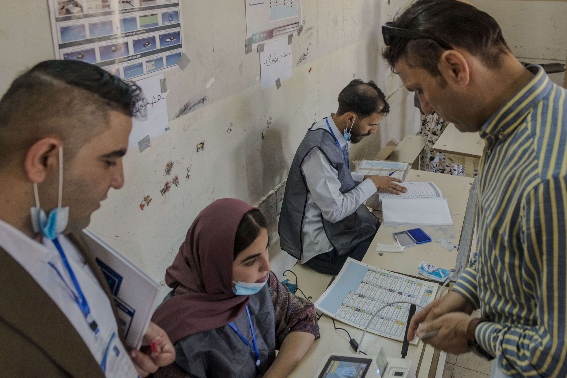

Iraq is preparing for local elections on December 18, amidst unstable political, security, and economic conditions. Despite these challenges, the Prime Minister Mohammed Shia al-Sudani’s government has been keen on providing all necessary resources to ensure the success of the electoral process. This commitment was emphasized in the government program announced after receiving parliamentary confidence.
These elections face numerous political challenges alongside logistical and technical issues. One notable challenge is the boycott by the Sadri movement, led by Shiite leader Muqtada Al-Sadr, along with several civil forces that emerged from the October 2019 protests. Additionally, there are other popular forces expressing a lack of confidence in the integrity of the electoral process.
Economic, social, and security challenges also play crucial roles in shaping the upcoming electoral landscape. The next elections will undoubtedly influence the political environment in Iraq for the upcoming period, particularly as they will set the stage for the general elections in 2025. This realization has prompted various alliances, parties, and electoral lists — particularly the major Shiite, Sunni, and Kurdish alliances — to prepare for these elections. Winning in them provides access to significant financial and economic resources and control over the general budget for the next three years. This is a main reason for their insistence on holding elections on schedule, despite political and legal challenges.
The repercussions of these elections will be significant. While they will contribute to shaping a new political situation in the country, they may also play a major role in creating a state of political instability. The Iraqi political experience since the first elections in 2006 suggests that every election marked by significant doubts and boycotts results in political chaos. The upcoming elections may not be an exception, especially with the considerable efforts made by al-Sadr and some civil forces to undermine or at least minimize the polls’ impact. This is aimed at reducing the political gains sought by some forces within the Coordination Framework (Itar al-tansiqi) — a Shiite political alliance that formed al-Sudani’s government — to strengthen their political position in Iraq.
Insight into the nature of the electoral competition
The upcoming local elections in Iraq represent the fourth electoral practice for local councils, as confirmed by various constitutional texts, notably Article 122 of the permanent Iraqi Constitution of 2005. This article highlights the process of administrative decentralization in Iraq and the legislation regulating that process through the electoral law, with the latest amendment being the third amendment to Law No. 4 of 2023.
Many amendments were made to the Local Council Elections Law No. 12 of 2018, leading to Law No. 4 of 2023, which included several changes, most notably in the number of electoral seats. The 275 seats are distributed among 15 Iraqi provinces, excluding the Kurdistan Region, based on the population density of each province. Article 9/2/A stipulates that the Provincial Council consists of 12 seats, with an additional seat for every 200,000 people exceeding one million, according to the Ministry of Planning statistics for 2019.
Seats for quotas (ethnic and religious minorities) totaling 48 seats were distributed among the provinces based on the distribution and geographic concentration of minorities. One seat in Baghdad was designated for Christians, Mandaeans, and the Shabak communities respectively, while in Nineveh, one seat each was assigned for Christians, Yazidis, and the Shabak. Finally, one seat was allocated for Christians in Basra, Kurds in Wasit, Mandaeans in Maysan, and Christians in Kirkuk.
Distribution of seats among the governorates in the Iraqi local elections in 2023
| Governorate | Seats | Candidates(total number) | Men | Women | Alliances | Political parties | Independents | Minorities | |
| 1 | Al-Anbar | 16 | 309 | 228 | 81 | 9 | 2 | 1 | 0 |
| 2 | Basra | 22 | 517 | 380 | 137 | 11 | 7 | 0 | 3 |
| 3 | Al-Qadisiyah | 14 | 261 | 187 | 74 | 8 | 2 | 0 | 0 |
| 4 | Muthanna | 12 | 191 | 141 | 50 | 7 | 2 | 0 | 0 |
| 5 | Najaf | 15 | 326 | 240 | 86 | 8 | 5 | 1 | 0 |
| 6 | Babylon | 18 | 390 | 285 | 105 | 8 | 4 | 1 | 0 |
| 7 | Baghdad | 49 | 1456 | 1004 | 452 | 16 | 12 | 7 | 18 |
| 8 | Diyala | 15 | 321 | 227 | 94 | 7 | 8 | 1 | 0 |
| 9 | Dhi Qar | 18 | 332 | 245 | 87 | 8 | 4 | 2 | 0 |
| 10 | Saladin | 15 | 256 | 185 | 71 | 6 | 4 | 1 | 0 |
| 11 | Karbala | 13 | 250 | 174 | 76 | 7 | 4 | 0 | 0 |
| 12 | Kirkuk | 15 | 245 | 178 | 67 | 10 | 5 | 1 | 5 |
| 13 | Maysan | 13 | 178 | 129 | 49 | 4 | 4 | 0 | 4 |
| 14 | Nineveh | 26 | 625 | 468 | 157 | 10 | 12 | 2 | 13 |
| 15 | Wasit | 14 | 262 | 188 | 74 | 9 | 2 | 1 | 5 |
| 16 | Total | 275 | 5919 | 4259 | 1660 | 128 | 77 | 18 | 48 |
This table was prepared by Dr Firas Elias, based on data issued by the Independent High Electoral Commission in Iraq
A thorough examination of the table detailing the distribution of seats across the provinces, the spread of candidates from alliances or parties, as well as independent entities (individuals), reveals a set of observations. Among them is a decrease in the number of candidates compared to the last local elections in 2014, where 7,500 candidates competed across 14 provinces. Notably, Kirkuk did not participate in the local elections since 2005, which witnessed a participation rate of 76%. In the upcoming elections on December 18, the number of candidates has decreased to 5,919, indicating an electoral anomaly influenced by legal, security, and political factors.
Upon further examination of the table’s data, an increase in electoral alliances becomes apparent in Baghdad, totaling 16, whereas in Basra, the number decreases, with only 11 electoral alliances in competition. It continues to decline, reaching Nineveh and Kirkuk, where 10 alliances compete in each province. This reflects intense electoral competition in these four provinces. While this is expected in Baghdad, with a population of approximately 8.5 million according to the 2019 Ministry of Planning statistics, it is unusual for Basra (3 million), Nineveh (3.8 million), and Kirkuk (1.6 million). Nevertheless, examining the sizes of these alliances in the four provinces indicates fierce electoral competition, especially in Kirkuk, where clear componential divisions are evident. Various electoral alliances are positioning themselves for a new political landscape, qualifying them for a potential new political phase, possibly a gateway to the upcoming parliamentary elections.
Looking at the distribution of political parties across the 15 governorates, we notice a clear decline in the presence of political parties compared to the number of candidates. In Baghdad, more than 1,450 candidates are competing through only 12 political parties, in contrast to Nineveh, where 625 candidates are competing through the same number of political parties. This noticeable decrease may be related to the demographic situation of the governorate and the cultural factors controlling it.
The chances of Baghdad Governorate remain the highest in terms of the number of candidates for independent political entities compared to the rest of the governorates, as it witnessed 7 independent competitors. Dhi Qar and Nineveh follow with two candidates for each governorate, while it is preparing to run in the elections as an independent entity, with one candidate for each of Anbar, Diyala and Saladin, Babylon, and Wasit. The subdued interest in individual candidacy might be attributed to two main factors: firstly, a lack of trust in the electoral system to support independent candidates, and secondly, the prevalent electoral polarization that has diminished the space for individual competitors in the electoral landscape.
Examining the disparities in the number of alliances, political parties, and independent entities across provinces — considering both populations and seat allocations — reveals a significant imbalance. Disparities dominate the competition for electoral seats, showing a substantial increase in one province and a decrease below expectations in another. The imbalance persists notably in the allocation of quota seats for women. For instance, in Babylon, 105 female candidates compete for only 4 quota seats, while in Dhi Qar, 87 female candidates also compete for 4 quota seats.
Competing political forces in the elections
The political map in the upcoming local elections in Iraq this month witnesses fierce competition among various electoral alliances. These alliances aim to secure the largest number of seats in local councils, extending their competition beyond one province. Some of them participate in multiple provinces, emphasizing the significant importance they assign to these elections.
Within the Shiite alliances, notable entities emerge such as the State of Law Coalition, led by former Prime Minister Nouri al-Maliki, encompassing various parties, prominently the Islamic Dawa Party and the Al-Bashir Youth Movement. Another significant coalition is the Tahalof Nabni (We Build Alliance) headed by Hadi al-Amiri, which includes several parties, notably the Badr Organization and the Tahaluf al Aqd al Watani(National Contract Alliance). As for the third alliance, it is Al Asas al Watani (the National Base Alliance), under the leadership of the acting Speaker of the House of Representatives, Mohsen al-Mandalawi. It includes several parties, most notably the Tejamu’ al-Watad al-Iraqi (Iraqi Wedge Gathering) and the Wathiqun Party, in addition to other Shiite alliances, including Al Aktharia al Watania (the National Majority Alliance) and the Al-Hadbaa National Alliance. Shiite alliances participate in all Iraqi governorates.
Regarding the Kurdish alliances, these elections marked the involvement of certain Kurdish parties with their official titles, such as the Kurdistan Democratic Party led by Masoud Barzani. The Kurdistan Democratic Party participates in the governorates of Nineveh, Kirkuk, and Saladin. As for the Patriotic Union of Kurdistan, led by Bafel Talabani, it participates in Kirkuk governorate under its main title. In the Nineveh Governorate, it leads the Nineveh People’s Union coalition, as well as other Kurdish parties, most notably the New Generation Movement.
In the realm of Sunni alliances, these elections showcased the rise of numerous Sunni parties and coalitions, in addition to the National Progress Alliance, led by former Speaker of the House of Representatives, Muhammad al-Halbousi, and the Sovereignty Alliance, headed by Khamis al-Khanjar. Furthermore, the elections marked the emergence of the National Resolution Alliance, steered by the current Minister of Defense, Thabet al-Abbasi. Also notable were the Azm Alliance, led by MP Muthanna al-Samarrai, the Leadership Alliance, under Deputy Prime Minister Muhammad Tamim, and the Nineveh for Its People, led by former Nineveh Governor Najm al-Jubouri.
Among the other alliances, particularly those representing minority groups like the Turkmen, Yazidis, Shabaks, and Christians, there was minimal transformation, barring one notable development: Rayan al-Kildani, leader of the Babylon Movement, initiated the formation of the National Identity Party. This party stands out for its mix of Arab and Christian candidates, with active involvement from civil parties within its framework. New alliances have emerged, most notably the Civil Values Alliance, led by MP Sajjad Salem, and the Civil Forces Alliance, headed by Fawaz Muhammad Dhiab.
The geographical spread of electoral alliances does not only indicate an increased electoral competition. It also points to a heightened conflict over resources among these alliances. This intensification is particularly notable given the Iraqi Parliament’s recent approval of the country’s three-year general budget, making victory crucial for any alliance. Local council quotas are largely controlled in these elections, which in turn imposes more complexity on the electoral environment in Iraq.
For example, the State of Law Coalition, led by former Prime Minister Nouri al-Maliki, and the Tahalof Nabni, led by the leader of the Badr Organization Hadi al-Amiri, participate in 10 Iraqi provinces (Baghdad, Basra, Thi Qar, Maysan, Muthanna, Karbala, Najaf, Wasit, Babil, and Diwaniya). The National Resolution Alliance, led by Defense Minister Thabet al-Abbasi, participates in 15 Iraqi provinces. The same principle applies to the Base Alliance, led by the Speaker of the House of Representatives Mohsen al-Mandalawi.
The electoral alliances led by Iraqi officials have notably maximized electoral competition, leveraging state resources to attract a broader spectrum of candidates and voters. This involves exploiting power by increasing opportunities for government sector appointments or expanding the base of those benefiting from social welfare. Additionally, there is the adoption of ‘social bribery’ to increase the chances of candidates getting the maximum number of votes. This negatively impacts the chances of independents or emerging civil parties.
The push from numerous political parties in Iraq, particularly the traditional ones, to reinstate the Sainte-Laguë electoral law indicates the prevailing landscape of the current Iraqi elections. This law heavily favors larger alliances, amplifying their chances of securing the majority in local councils, posing a challenge for medium and small alliances — a concern shared by many participants in these elections.
The Sainte-Laguë method poses theoretical and practical challenges. Notably, it requires significant financial resources due to its reliance on a single nationwide district or one district per province. As a result, candidates within these entities or lists need considerable funds to cover the expansive electoral district. This underscores the significant role of political finances and power, often exploited by larger alliances. Moreover, these electoral methods may align more with the national context than with the nuances of local or municipal elections, where citizens require representatives attuned to their specific regional needs. This discrepancy highlights a third challenge: the recurrent dominance of large electoral alliances in the political landscape. Despite objections to the Sainte-Laguë law from various societal segments — civil society organizations, religious authorities, and certain political forces, including newer emerging parties — it continues to perpetuate the stronghold of these large alliances.
Variables affecting the electoral process
The Iraqi electoral process contends with several factors that significantly influence its potential success, recurring within the context of elections held since 2006. This recurrence primarily stems from the persistent endeavor of traditional political forces to uphold their influence and resources through various election formats — be it parliamentary or local. The upcoming elections scheduled for December 18 hold great significance, prompting concerted efforts by these traditional political forces to ensure their occurrence on the designated date, despite objections raised by entities like the Sadrist movement and civil movements across the country.
While Iraqi elections share similarities with electoral processes worldwide, their distinctiveness resides in the formal aspects frequently scrutinized by various political and social movements in the country, given their importance in shaping the political process. The primary objection raised by the Sadrist movement revolves around the perception that these elections serve as a means to further consolidate the Coordination Framework’s control over the nation. Consequently, there have been calls to curtail this perceived control either by postponing the elections or by impeding them through boycotts.
Furthermore, civil movements harbor deep concerns regarding these elections, primarily due to their apprehension about the absence of a secure electoral environment conducive to their active participation. Consequently, they submitted a constitutional appeal before the Federal Supreme Court earlier this month. Their contention stemmed from the special session of the House of Representatives, chaired by Speaker Mohsen al-Mandalawi, which resulted in the passage of a law extending the Independent High Electoral Commission’s tenure by 6 months. They perceive this extension as a clear constitutional violation that significantly undermines the legitimacy of the upcoming elections.
In light of the aforementioned context, several additional factors are set to exert significant influence on the upcoming electoral landscape in Iraq. These include:
Level of participation
The anticipated level of participation stands out as a pivotal determinant of the forthcoming local elections’ success. Recent opinion polls conducted across the country project a participation rate not surpassing 21% of the total eligible voters. Notably, a survey conducted by the Department of Media and Public Relations at the University of Baghdad revealed public sentiments regarding the impending local council elections. Among the respondents, 35.9% expressed their intent not to participate, while 43% remained undecided. Reasons cited for non-participation are telling: the predominant cause, voiced by 39.8% of non-participants, centered around concerns of external interference in the election outcomes. The belief that the elections won’t offer a solution for Iraq ranked second among the reasons, while the perception of predetermined results ranked third. This comprehensive survey encompassed a sample of one thousand individuals aged 18 and above, representing various segments including employees, wage earners, and housewives. It is the first survey conducted to find out the citizens’ opinion regarding elections in Iraq.
According to data from the Independent High Electoral Commission in Iraq, over 23 million citizens are eligible to vote in the upcoming local elections, but those who updated their electoral records are less than 10 million. The Commission confirmed that 296 political parties organized into 50 alliances would participate in the elections, competing for 275 seats in local councils. Of these, 75 seats are allocated for women, and 10 seats for ethnic and religious minorities.
An official from the Independent High Electoral Commission revealed that citizens refrained from updating their records or collecting their voter cards, indicating their reluctance to participate in the upcoming elections. Approximately 4 million Iraqis chose not to update their data, making them ineligible to participate in the electoral process. This substantial figure highlights a widespread voter apathy.
Election integrity
Alongside complaints related to forgery and violations during the voter registry update process, continuous amendments to the electoral law in the country directly impact the integrity of the electoral process. The latest change was from Electoral Law No. 9 of 2020 to Law No. 4 of 2023, adapting the electoral process to the interests and desires of major political blocs, especially after their losses in the early elections of October 2021.
In addition, local council elections will be held according to the Sainte-Laguë method, a system that calculates coalition votes by an electoral divisor (1.7). This mechanism tends to favor the fortunes of larger political entities at the expense of individual candidates (independent and civil), as well as emerging and small entities. This stands out as the foremost challenge in ensuring an electoral process where all candidates have equal opportunities.
Impact of unlawful arms
Iraq suffers from the widespread possession of illegal weapons held by various armed groups, some of which directly rebel against the state. These groups launch rocket attacks on the U.S. embassy and military bases housing American forces in Iraq. The Sudani government’s failure to control these groups poses a real threat to the elections. Candidates associated with armed groups, tribes, and organized crime could potentially manipulate voting in rural, tribal, and remote areas. This scenario raises concerns about significant manipulation during the election processes in these regions, particularly as these groups possess medium and heavy weaponry.
Political finance exploitation
As the date of the local elections in Iraq approaches, warnings have escalated about the exploitation of state resources and funds for electoral purposes, which contradicts the country’s laws. Election commission regulations prohibit the use of government buildings, various state institutions, places of worship, and the official state emblem in electoral campaigns. Expenditure on election campaigns using public funds, ministry budgets, religious endowments, or foreign support is also prohibited. Additionally, any attempts involving pressure, coercion, material or moral incentives, or promises to influence voters and election outcomes are strictly forbidden.
High-ranking officials within the Iraqi state, including ministers, deputies, and governors, face allegations of exploiting state resources for the advantage of specific party alliances. Concerns about state exploitation have become a common slogan among all political factions, shifting from a popular demand to a national necessity to ensure the integrity of elections.
The problem of political conflict
Amidst the heightened election campaigns across thousands of candidates in all Iraqi provinces, a clear contrast has surfaced in the nature and substance of campaigns between Sunni-majority provinces and mixed or Shia-majority areas. In the western Sunni-majority regions, campaign rhetoric escalated into sharp verbal disputes, notably following the removal of Parliament Speaker Mohammed al-Halbousi. Leading the largest party in Anbar province, Halbousi confronts significant challenges, including potential legal ramifications that pose a threat to his political trajectory.
In Shia-majority provinces, tensions escalated beyond mere verbal disputes to include armed attacks targeting the offices of the Dawa party across several Iraqi regions. Although the Dawa party did not directly accuse any specific party in its statements, it labeled the perpetrators as “outlaws”. Followers of Muqtada al-Sadr, engaged in a rivalry with Dawa and its leader Nouri al-Maliki, declared a peaceful boycott of the elections as directed by the Sadrists’ leader.
Meanwhile, al-Sudani’s government issued orders urging military and security leaders to refrain from influencing the voting choices of security force members. General Yahya Rasool Abdullah, spokesman for the Chief of Staff of the Armed Forces, stated that Sudanese military leaders were instructed to safeguard the “unbiased” choices of members and fighters during the special voting day for provincial and district council elections.
Legitimacy of the elections
The concept of ‘legitimacy’ has been a recurring focal point for Muqtada al-Sadr, the leader of the Sadr movement, and his close associates in the context of the planned boycott of the December 18 local elections. Al-Sadr contends that the legitimacy of these elections is compromised domestically and internationally. His objections primarily target the Coordination Framework, encompassing Shia political entities and armed factions, as well as other parties aligned with the current state administration. Al-Sadr’s political stance aims to forge an initial alliance between the Sadrists and civil opposition, signifying the onset of a new phase.
Undoubtedly, the local elections face a legitimacy crisis, making them, in one way or another, a referendum on the acceptance of the Sudanese government by the Iraqi people. The government’s efforts to guarantee the success of the electoral process indicate an attempt to counteract the anticipated failure advocated by al-Sadr and civil forces. The low rates of updating the voter registry, coupled with escalating calls for boycotts or abstention from participation, will raise important questions regarding the efficacy of local councils should they fail to secure minimum public endorsement.
The ongoing economic and social crises plaguing Iraqi society have stirred a sense of frustration among voters. Anticipations lean towards a low turnout in the elections as many do not believe in their potential to yield substantial political and economic reforms. A diminished voter participation might cast doubts on the state’s legitimacy, signifying a critical juncture for Iraq’s future trajectory. However, regardless of the election outcome, these polls are set to underscore a shift led by a younger generation altering Iraq’s political landscape. Even if the immediate ballot results show no fundamental change, the persistent demands from Iraqi society for reform are likely to materialize in the long run.
Challenges facing the local elections
In addition to the discussed variables, Iraq faces a multitude of self-imposed challenges as it approaches the electoral process scheduled for December 18. These challenges are set to significantly influence the electoral landscape. Apart from the conspicuous challenge of low citizen participation, credibility and fairness crises loom large over the elections. The previous electoral debacle in October 2021, deemed the worst since 2003, cast serious doubts on the electoral process and democratic legitimacy. The failure of the biometric voter card system tarnished its reputation among voters, local observers, and international monitors alike.
The political stability witnessed in Iraq during the first year of the Sudani government is now facing a series of challenges domestically and internationally. The cracks in stability surfaced on October 7 with the Gaza war outbreak, signifying the fragile truce between the government and the Coordination Framework forces. The escalating conflict between armed factions and U.S. forces in Iraq presents a steadily growing challenge, widening the scope of unrest.
The withdrawal of the Sadr movement led by Muqtada al-Sadr and its announcement of boycotting local elections pose yet another hurdle for the electoral process. Al-Sadr’s withdrawal and its potential repercussions loom as a latent threat to the government formed by the Coordination Framework, which constitutes the largest parliamentary bloc. Later, this bloc formed an alliance with former allies of al-Sadr within the Save the Nation alliance, including the Kurdistan Democratic Party led by Masoud Barzani and the Taqadum Party led by Mohammed al-Halbousi. Despite a year passing without friction between al-Sadr’s vast following and the government or its supporters — such as the State Administration Coalition, which emerged as the largest supporting bloc for al-Sudani’s government with 180 out of 329 total members — challenges persist, hinting at an increasingly complex electoral landscape.
Another significant challenge arises from Iraqi factions closely affiliated with Iran. Iraq’s imminent local elections carry critical weight for most political forces. Certain factions have declared their intent to “militarily liberate Iraq”, as articulated by Hashd al-Shaabi (Popular Mobilization Forces), which initiated attacks on U.S. bases in Iraq. The Iraqi government insists on its responsibility for safeguarding diplomatic missions and American advisors, who were requested by the Iraqi government. Notably, armed factions like the Asa’ib Ahl al-Haq and the Badr Organization, holding political representation in parliament and aligning more with the government, stand in contrast to others such as the Nujaba Movement, Hezbollah Brigades, and other factions pursuing different paths.
The most prominent variable is the economic challenge, which has gained attention in the Iraqi public discourse. This is especially true after the significant increase in the exchange rate of the Iraqi dinar against the dollar, coupled with rising corruption rates in government institutions. Despite the government’s efforts to address these economic problems, they persist and dominate the electoral agendas of voters. While many voters have lost faith in the government’s ability to mitigate these challenges, some remain hopeful that local councils can deliver tangible solutions by increasing investment projects, improving infrastructure, and expanding economic opportunities.
Social issues also surface on the sidelines of the electoral process, notably in cities liberated from ISIS control. These cities continue to grapple with post-liberation hurdles such as sluggish reconstruction, compensating war victims, and the presence of residents in UN displacement camps. Additionally, armed factions controlling certain cities prevent the return of original inhabitants, citing ongoing ISIS threats. These social challenges prominently feature in candidates’ electoral programs. However, the lack of practical solutions seven years after the end of the war against ISIS has eroded the trust of many residents in the potential for immediate resolutions through local elections.
Security challenges loom large over these elections, occurring within a complex security landscape. Escalating conflicts between Iraqi factions with ties to Iran and U.S. forces, coupled with the proliferation of weapons among tribes and organized crime groups, ongoing ISIS attacks, and continuous Turkish airstrikes in northern Iraq, collectively cast a shadow over the safety of the electoral process. Some parties, particularly armed factions and tribes, may perceive the political conflict as an opportunity to contest the election outcomes. Moreover, ensuring ‘electoral security’ itself stands as a critical challenge to upholding the integrity of the country’s elections.
Previous electoral occurrences in Iraq, including the latest ones in October 2021, witnessed severe violations within the electoral process. Instances of burned ballot boxes, substantial vote falsifications, and lingering doubts regarding potential tampering operations by the Independent High Electoral Commission have marred electoral integrity. Addressing these practices stands as a significant challenge for the Independent High Electoral Commission to to secure the electoral process.
Many regional and international powers with influence in Iraq closely monitor these elections. Regional powers like Iran, Turkey, and Gulf Arab States cautiously watch the potential victories of their allies in these elections. Their focus lies in leveraging the roles of various alliances participating in these elections to bolster their influence in Iraq, particularly seeking investment, trade, and economic opportunities that winning by their allies in local council elections can provide. Similarly, the United States demonstrates a vested interest in the success of the electoral process, aiming to sustain the country’s fragile political stability amidst its ongoing focus on conflicts in Ukraine and Gaza. The United Nations, represented by the Secretary-General’s Special Representative in Iraq, supports local elections in the country as a means to achieve a secure and stable Iraq.
The possible repercussions of the local elections
Significant factors hover on the periphery of the electoral process, and the outcome of the forthcoming local elections on December 18 is set to have a direct impact on the political landscape in the country as follows:
1. Political Stability: These elections will significantly influence Iraq’s political stability. The Coordination Framework’s decision to proceed despite boycotts by the Sadr movement and civil groups might trigger post-election political reactions.
2. Coordination Framework’s prospects: Despite the boycott by the Sadr movement and civilians, the Coordination Framework aims for a strong electoral victory. The determination to hold the elections on schedule indicates its intent to push its electoral alliances to win and further control the political scene by strengthening its grip on the parliament and local councils. However, the biggest challenge could be the Coordination Framework’s failure to achieve a clear victory, potentially leading to attempts to manipulate election results, similar to what happened in the early elections in 2021.
3. Civil Movements’ Challenge: The success of the Coordination Framework in establishing absolute control over the political scene, as seen in the post-2018 elections phase, could lead to the emergence of a new wave of protests, especially given the ongoing economic crisis. These elections pose both an opportunity and a threat to civil forces, depending on whether they result in a clear defeat for the Coordination Framework or reinforce its control over Iraqi politics.
4. Electoral Law’s impact: The nature of the electoral law governing the local elections, particularly the Sainte-Laguë method, may allow major alliances to have a significant chance of winning. However, it also limits the possibility of any electoral alliance achieving a clear majority, leading to weak and fragmented local councils. This, in turn, will influence the political landscape and decision-making processes at both local and national levels.
5. Impact on the political system: The success of provincial council elections will play a crucial role in shaping the political system in each province. The competition will be fierce, especially in resource-rich provinces like Basra and Kirkuk. Successful elections could strengthen a period of relative stability in Iraq and provide confidence for Sudani’s government to conduct early parliamentary elections or complete its term.
6. Public perception: The success of the elections and the subsequent functioning of local governments in electing governors and providing services will be crucial for restoring some trust. If local councils are perceived as successful, local elections will be considered as a positive step. Otherwise, it may lead to the view that they are unnecessary and a tool for enabling corruption, affecting the overall legitimacy of the Iraqi state and threatening the political system.
7. Voter discontent: The long-standing political scene and the failure of successive governments to provide basic services and protect the state, society, and public funds have created a sense of disillusionment among Iraqi voters. This has led to various forms of political expression, including joining extremist groups, supporting armed factions close to Iran, or engaging in radical protests against the government. Voter disillusionment has the potential to lead to election boycotts, significantly hampering the efficacy of the political change process. This diminishes the impact of elections, rendering their results ineffective and diminishing their influence on both domestic and international political decisions. Consequently, the transformative potential for the political system and democratic process in Iraq is stifled, impacting society and the state as a whole.
8. Democratic process transformation: The track record of Iraqi democratic experiences post-2003 reveals that regardless of the structure of upcoming local councils, they tend to operate with variable effectiveness. These councils are often vulnerable to the political upheavals that plague Iraq, heavily influenced by consensus among major political entities. The leadership within blocs and political spheres may face disruptions in exercising their executive authority, further compounded by regional and international influences. Given the prevalent regional and international polarization, the likelihood of establishing independent local councils free from external influences appears slim. Thus, the success of Sudani’s government in orchestrating transparent local council elections hinges on crucial questions: Can the prevailing competition among electoral alliances navigate the country’s crises? Will these councils prioritize competitiveness or cooperation in their formation?
Conclusion
The upcoming local elections stand as Iraq’s most pivotal political event in 2023, encapsulating a landscape of changes, challenges, and potential global and regional implications. Beyond the debates surrounding participation rates and election fairness, these elections are set to usher in an important political transformation shaping Iraq’s trajectory in the coming phase.
Many electoral alliances view the results of these elections with great apprehension due to their significant role in determining their political future. Consequently, they are actively engaged in fierce competition, aiming to expand their electoral base by garnering more public support. The primary dilemma facing these electoral alliances lies in the unpredictable sentiments of the electorate, coupled with their loss of trust and optimism in the electoral process. Despite their early efforts, securing a substantial number of votes remains a challenge shrouded in uncertainty. These elections, while serving as a political milestone, also serve as a referendum on the legitimacy of the political system in the country, making them laden with significant risks.
Ultimately, the Sudani government’s commitment to proceeding with these elections not only asserts a political prerogative but also serves as a litmus test for the legitimacy of the nation’s political system. Consequently, these elections underscore the intricate and pivotal nature of Iraq’s political landscape.