European Institute for Studies on
the Middle East and North Africa

ANALYSIS

Read Our Latest Article

The Kirkuk-Baniyas Pipeline: What Does History Tell Us?

Sardar Aziz

CATEGORIES

United Arab Emirates and Sudan: How a Small Country Fuels a Large War?

December 4, 2025

Thierry Vircoulon

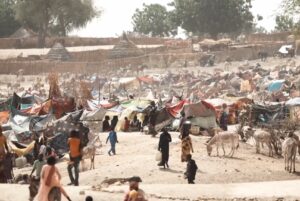
From the outset of the war in Sudan between the army and the Rapid Support Forces (RSF), the United Arab Emirates chose its side. Seeking to counter a Sudanese army influenced by the Muslim Brotherhood, they support the RSF, with whom they had previously established military-financial ties. This Emirati support is part of their broader regional strategy to combat Islamist movements. After two years of war, their military and financial partnership not only persists but is expanding. In response, the Sudanese army has adopted a strategy aimed at accusing the UAE on the international stage and disrupting the flow of supplies coming from the country. On January 7, 2025, the U.S. Treasury Department imposed sanctions on Mohammad Hamdan Daglo Mousa (Hemedti), the leader of the Rapid Support Forces, as well as seven companies based in the United Arab Emirates that conduct business with the RSF. These sanctions underscore the role the UAE is playing in the Sudanese conflict.

What Does Mark Savaya Reveal About the Iraqi-American Relationship?

November 24, 2025

Myriam Benraad

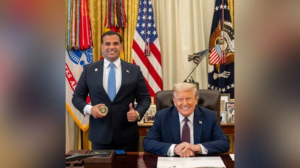
The appointment of Mark Savaya as U.S. Special Envoy to Iraq in October 2025 reflects an effort by the Trump administration to reinforce Iraqi–American relations amid regional instability. Officially aimed at supporting Iraq’s stability and reconstruction, it also signals a U.S. intention to counter Iran-linked Shiite militias. While Savaya’s Iraqi background has drawn attention, questions remain about whether his role can genuinely rebuild trust and sovereignty or instead reflects continued U.S. influence, highlighting broader shifts in Iraq–U.S. relations.

MOST VIEWED

GenZ212, Nonmovements, and the Monarchy: The Future of Protest in Morocco

A paradox of evolution and revolution, the 2025 Moroccan Gen Z movement was, in many respects, the ideological heir to previous uprisings while simultaneously representing a conceptual evolution in the repertoires of popular dissent. The protests marked a nuanced shift towards decentralised, unconventional nonmovements, an iterative process whose immediate and enduring legacy has profound implications for the future of both protest and governance in modern Morocco.
Read More