

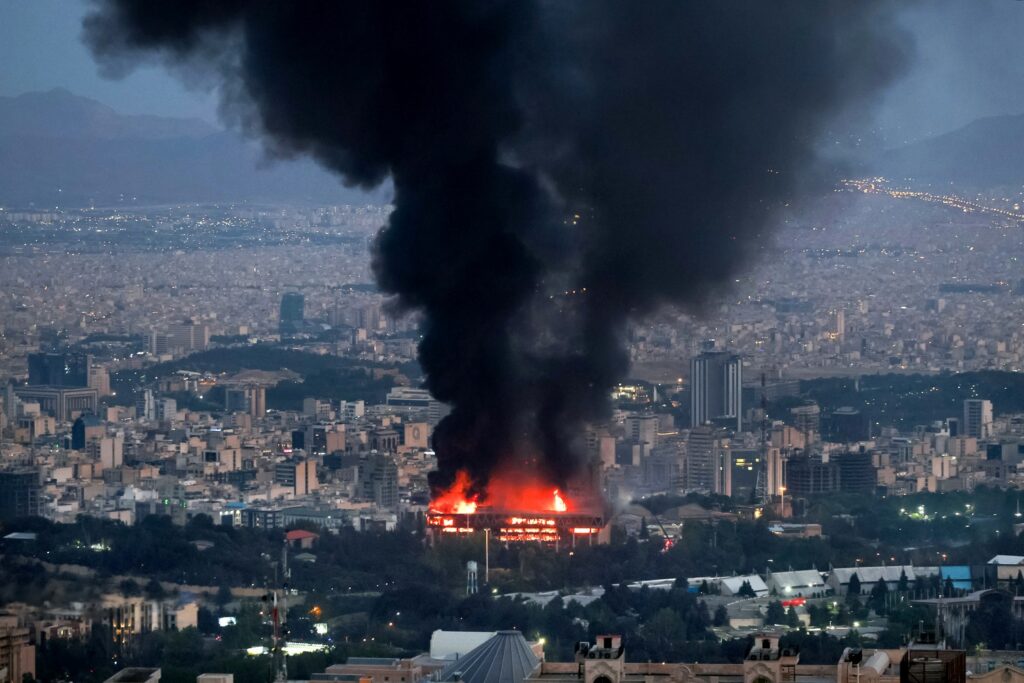
Is chaos an intrinsic feature of the Middle East? This persistent question spans all eras in a region so coveted, torn by divergent interests, and beset by violent conflicts that are currently reaching a critical turning point. In his essay The Disintegration of the Middle East, Adel Bakawan, sociologist, director of the European Institute for Studies on the Middle East and North Africa (Eismena), and associate researcher for the Turkey/Middle East program at the French Institute of International Relations (Ifri), offers his perspective to better understand the current chaos by immersing himself in the tragic destinies of Middle Eastern societies. A knowledgeable observer of this “complicated Orient,” he combines historical insight with reflections on the profound transformations sweeping the region, allowing him to identify trends, mistakes, and opportunities, and to illuminate possible scenarios for the countries of the region.
He proposes a framework centered on three historical moments that have shaped the region during the first quarter of the century:
- September 11, 2001, and its consequences;
- The Arab Spring in 2011 – its hopes and disappointments;
- The tragic Hamas attacks on October 7, 2023, followed by a dramatic war in Gaza that profoundly redefined the balance of power among actors.
“Three breaks that changed history.”
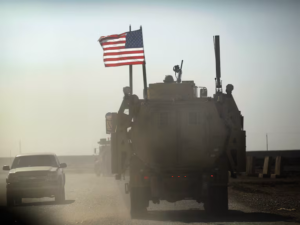
The September 11, 2001 attacks on the World Trade Center mark the first tipping point. That day inaugurated a cycle of instability, an era of global counterterrorism, accompanied by controversial military interventions, particularly in Afghanistan and Iraq. Adel Bakawan clarifies the confrontation between idealists and realists within U.S. policy, a fundamental tension of the period (1990–2003). It culminated in the emergence of a “new neoconservative order” aimed at restructuring the Middle East through the creation of the “Greater Middle East.” But after April 9, 2003, the date of Baghdad’s fall, it became a question of the “collapse of the American utopia.” Multiple factors contributed to this failure: strategic American mistakes, complex regional dynamics, internal resistance entanglements, and the disappointments of Iraq’s American allies—whether Shiite, Sunni, or Kurdish—in response to Washington’s reversals. This threatening context contributed to the proliferation of armed militias and the rise of jihadist terrorism with an international scope. The author highlights and clarifies the era of Iraq’s co-management by the Americans and Iranians, symbolized by the key role of General Qassem Soleimani—a seemingly incomprehensible co-management, which the author explains: “Any attempt by one of the two countries to challenge this co-management plunges all of Iraq into deadlock, even civil war. Together, they build the new Iraq with all its fragilities and try to manage it jointly, because after them, the flood is inevitable, it would be the collapse of the country.”
That feared flood did not take long to arrive: facing the country’s critical evolution and the impossibility of carrying out a demilitarization process, Iraq became the quintessential territory for the rise of militia power. The author details, in a didactic and precise manner, the birth of the “militia-state,” allowing readers to grasp the magnitude of the challenges confronting regional states. Indeed, this phenomenon has far exceeded Iraq, now forming part of a broader process of governance transformation in the Middle East.
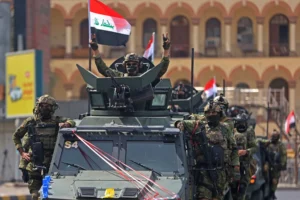
“The American occupation of Iraq, initially presented as a nation-building project aimed at democratizing the Greater Middle East, quickly transformed into a process of militia-building, laying the foundations for a ‘militiarization’ that plunged the region into a sustained cycle of violence and instability,” warns Adel Bakawan, analyzing the scope of the militia order: it goes beyond a parallel military structure to the state and constitutes a program of total resocialization designed to impose a way of life fully shaped by militant ideology. “Where weakened states struggle to assert sovereignty, militias impose a new order, forging links with existing powers while gaining autonomy. This rise is not limited to military structures; it extends to institutions, the economy, and society, shaping a parallel state, even a counter-state.”
Through omnipresent control, militias shape a “new man,” entirely devoted to the cause. This phenomenon spreads across the region. In this context, the author examines the reciprocal dynamics between Hamas and the broader militia landscape in the Middle East. He analyzes the link between Hamas, operating in a stateless Palestinian space and part of the Sunni Muslim Brotherhood international network, and the militias supported by states (Iraq, Lebanon, Syria) organized and coordinated by Shia Iran, forming the “axis of resistance.” “Through these links, Hamas transforms these militias into a crucial resource mobilizable at any moment in its conflict with Israel; in return, militia actors exploit their ties to Hamas, perceived as the embodiment of resistance against Israel, to bolster their legitimacy and public image,” reveals Bakawan.
The second tipping point analyzed is the Arab Spring. Popular uprisings, expressing a deep desire for freedom and justice, overthrew entrenched and corrupt dictatorships. This revolution, beginning in Tunisia, spread across North Africa and the Middle East. The author examines, case by case, the reasons behind these revolts, which ultimately resulted in profound disillusionment, with democratic aspirations often supplanted by a return to authoritarianism, civil wars, and widespread violence.
In a third section, he explains the ongoing realignments after October 7, focusing on major geopolitical stakes arising from the Gaza war and its repercussions on Middle Eastern countries. Through a nuanced analysis of the main actors involved, he identifies the shifting balance of power in the region and examines the transition of Arab countries from a conflict-based logic with Israel to a partnership-oriented dynamic. Some Arab states now perceive Iran under the ayatollahs as the primary existential threat. Furthermore, the reduction of U.S. aid to Saudi Arabia—particularly after Houthi attacks on Saudi oil infrastructure, supported by Iran—could elevate Israel as a central actor capable of supporting Gulf countries.
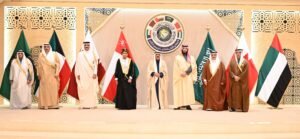
The fear of the Palestinian issue being instrumentalized by two historical adversaries—Iran and the Muslim Brotherhood—has led some Arab states to strengthen their rapprochement with Israel to preserve stability, with the Abraham Accords as a logical outcome. Palestinian nationalism is attempting to assert its own destiny, independent of Arab state strategies—a repositioning that reflects a significant strategic shift. “These developments illustrate the complexity of the Israeli-Palestinian conflict and the persistent challenges to an ‘unlikely peace’ in the region,” writes Bakawan. However, the massacres of October 7, 2023, and their consequences also marked a decisive turning point for Arab states in general, and Saudi Arabia in particular. “No diplomatic relations with Israel before the creation of a Palestinian state,” declared Saudi Crown Prince Mohammed bin Salman on September 18, 2024.
What balances will emerge after October 7 and the Gaza war? “The axis of resistance” is annihilated; the strategic position of the Islamic Republic of Iran is weakened; the country will face internal and external challenges, forced to adapt to a new geopolitical reality. Turkey and Saudi Arabia emerge strengthened, the latter becoming ‘the architect of a new Middle East.’ Israel has succeeded, at least temporarily, in countering Iran’s project to establish a militia-based order in the Middle East. From Syria to Iraq, from Palestine to Lebanon, Iranian influence is in sharp decline. More than ever, Israel imposes its terms not only on regional actors but also on the international community. As a victor in this conflict, Israel has never been so powerful since its founding. The country now claims the means to reshape the destiny of a Middle East under its influence.”
The author then highlights the divergent positions of Arab states, torn between national interests, popular pressure, and strategic alliances. Turkey, both a NATO member and a regional power with clearly stated ambitions, is working to redefine its role in a transforming Middle East while consolidating its position, particularly since the fall of the Assad regime in Damascus and the rise of its allies Hayat Tahrir al-Sham and an Islamo-conservative president. Turkey is extending beyond its current borders, already occupying areas in Syria and Iraq, and taking advantage of the void left by Russia and Iran in Syria to expand its influence.
This complex situation also raises questions about the future of political Islam and terrorism, with the Muslim Brotherhood and ISIS still active in the region. It invites deep reflection on their role and influence in reshaping the Middle East in an increasingly uncertain global context. The author calls for “an end to the instrumentalization of terrorist groups by states, whether in international rivalries or within their own societies.”However, he adds, “observing state behavior toward ISIS, particularly in the Middle East, leaves little room for optimism. While some maneuvering space remains, the dream of a future without ISIS is still distant.”
In an increasingly unstable regional context, major powers, particularly the United States and France, find themselves in a delicate situation, balancing the need for military intervention with growing international pressure for a ceasefire, highlighting their role in crisis management—an essential aspect of this dynamic. In the face of a weakened Iran, a strengthened Turkey and Saudi Arabia, and the return of Donald Trump acting as negotiator, Bakawan concludes his essay with future scenarios for five spheres: probable scenarios for the Israeli space; the Persian space in full transformation; strategic turning points for Turkey; the Arab space balancing normalization, authoritarianism, and disintegration; the Kurdish space between hopes for statehood and regional threats; and finally, the European Union facing Middle Eastern realignments, with both opportunities and limitations, concluding: “Without strategic coherence and unified action, the EU risks continuing to be perceived as a secondary actor. Yet in a region where conflicts directly threaten its security, migration, and energy interests, Europe stands to gain by assuming a proactive role, which requires defining a long-term vision and sustained engagement, combining diplomacy, development, and defense.”
This essay, rich in content, has the merit of untangling the numerous stakes of the region in an objective and educational manner. Through his rigorous reasoning and scholarly insight, Adel Bakawan has succeeded in clarifying complex and inextricable situations, as well as the constantly evolving geopolitical dynamics, the ambiguous strategies between major powers and regional actors, and the convoluted interactions between states, militias, and even among militias themselves. His work contributes to a deep understanding of the multiple transformations taking place in the Middle East.
Revue politique et parlementaire : Edition : Juillet – septembre 2025 Journaliste : Katia Salamé Hardy – P.212,212-216